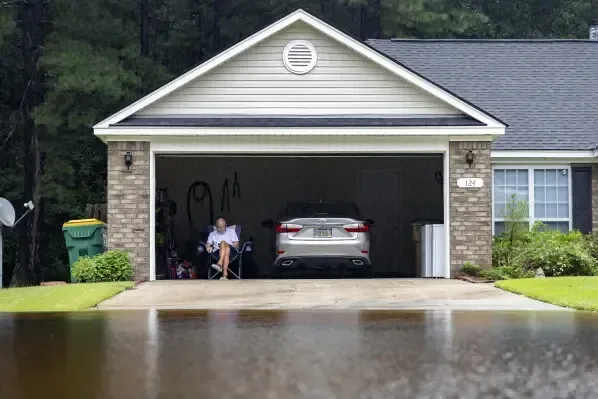
Some Liberty homes sit inside a mapped floodplain, and the City of Liberty has put that on record. When creek water reaches a house in that kind of area, the work is about contamination and drying more than mopping.
Key takeaways
- The City of Liberty Stormwater Master Plan lists homes and local streets inside the 100-year floodplain along Cates Branch at Murray Road.
- A floodplain label describes mapped location, not how often water has entered a particular house.
- Flood water is treated as Category 3, so porous materials it touched are removed rather than dried in place.
- Standard homeowners policies commonly exclude flood, and flood coverage is usually a separate policy.
- Photos, a room by room list of losses and early drying protect both the building and any claim.
What the stormwater plan says about Cates Branch
The City of Liberty Stormwater Master Plan examines four watersheds: Cates Branch, Rush Creek, Town Branch and Little Shoal Creek. It measures them against FEMA regulatory mapping effective August 2015.
For Cates Branch, the plan lists homes and local streets inside the 100-year floodplain at Murray Road. That is a statement about mapped location, not a record of how often water has entered those homes.
The 100-year label describes a flood size with about a one in 100 chance in any year. Smaller floods come more often, and a large one can arrive in back to back years.
Because the plan sits beside FEMA regulatory mapping, an owner can compare a property with the map instead of guessing.
Why flood water is not treated like a plumbing leak
Water from a creek or a street carries soil, fertilizer, fuel residue and sometimes sewage. For that reason flood water is treated as Category 3, the same class as a sewage backup.
A broken supply pipe puts clean water into a house. Flood water puts a contaminated mix in, and what it touched is judged by what it soaked into.
- Porous materials such as carpet, pad, insulation and low drywall are removed.
- Hard surfaces and framing are cleaned and disinfected.
- Items that cannot be cleaned, such as soaked upholstered furniture, are photographed and discarded.
What flood water leaves behind
When creek water recedes, it leaves silt, debris and a smell that lingers in porous materials. Appliances, ductwork near the floor and wall cavities can hold contaminated water out of sight.
Mud dries into a crust that traps bacteria against surfaces, so it is shoveled and washed away early rather than left to harden.
- Silt on floors, stairs and in window wells.
- Moisture in wall cavities behind drywall that looks intact.
- Contaminated water in ducts, appliances and switches near the floor.
- Odor in carpet, pad and upholstered furniture.
Safety before any cleanup
Flood water and electricity do not mix. If water has reached outlets, the breaker panel or appliances, power to the affected area should be shut off by an electrician or the utility rather than by wading in.
- Stay out of rooms where water is touching outlets or cords.
- Wear boots, gloves and a mask for any contact with flood water.
- Keep children and pets away from wet areas.
- Do not use a household vacuum on a wet floor.
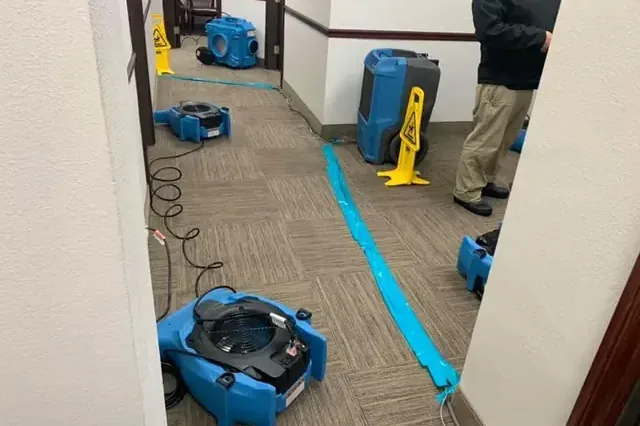
The cleanup order after flood water
The order of work matters because each step protects the next one.
Extraction comes first
The extraction crew removes standing water with pumps and truck-mounted or portable units. Water extraction goes first because water left in drywall and carpet pad keeps moving higher.
Removal of what cannot be saved
Once the water is out, the mitigation team cuts back wet drywall and insulation and lifts flooring that soaked up contaminated water. Silt and debris are shoveled out and bagged.
Where a home has a lower level, flood water collects there first, and basement flooding cleanup pumps it out in stages so walls are not stressed by a sudden change in pressure.
- Drywall is usually cut above the waterline so the cut edge sits on dry material.
- Wet insulation is removed because it does not dry reliably in place.
- Hard surfaces are cleaned and disinfected before drying begins.
Drying and checking
Air movers and dehumidifiers run until moisture readings match a dry reference. Storm and flash flood cleanup is finished when the readings, not the surface, say the structure is dry.
Hidden moisture in framing is why structural drying readings continue after a room looks clean.
Flood insurance and why mapping matters
FEMA flood maps are used to set flood insurance requirements and rates. Standard homeowners policies commonly exclude flood damage, and flood coverage is usually a separate policy, often through the National Flood Insurance Program.
The FEMA Flood Map Service Center lets an owner look up the mapped status of an address, which is worth doing before a storm rather than after.
A claim for flood damage usually asks for a list of lost items, photos and repair estimates. The drying log from the cleanup team shows how long materials were wet.
- Ask the insurer what the policy says about flood, surface water and sewer backup separately.
- Photograph everything before it is removed.
- Keep photos of flooring and finishes so replacement pricing is easier.
Preparing a home near the creek for the next storm
The stormwater plan looks beyond Cates Branch. It also notes roadway flooding on a Rush Creek tributary at Lightburne Street and restrictions on Little Shoal Creek at the Liberty Drive crossing, so attention to creek water is part of how the city plans.
Households near a mapped creek can lower the cost of a bad storm with a few habits.
These habits are not a prediction that water will come. They are a plan for a household that wants fewer decisions to make in the middle of a storm.
- Know where the electrical panel and the main water shutoff are.
- Keep important papers and electronics above floor level.
- Test the sump pump and its discharge before heavy rain season.
- Keep gutters clear and downspouts discharging away from the foundation.
- Keep a photo inventory of belongings on a phone.
Questions
Does being in a mapped floodplain mean a home will flood?
No. A floodplain label describes where flood water is expected to go in a large storm. It does not say how often water has entered a given house.
Is flood water cleaned differently from a burst pipe?
Yes. Flood water is contaminated and treated as Category 3, so porous materials it touched are removed. A clean supply leak can often be dried in place.
Does homeowners insurance cover flood damage?
Standard homeowners policies commonly exclude flood, and coverage is usually a separate policy. The policy wording and the cause of the water decide what is covered.
How long does drying take after a flood?
It depends on how far the water spread and what it soaked into. Drying continues until moisture readings match a dry reference, and quick extraction shortens it.
Where can an owner see the mapped flood status of a property?
The FEMA Flood Map Service Center shows the mapped status of an address. The city stormwater plan describes the Cates Branch area at Murray Road.
What should be photographed before flood cleanup?
Wide shots of each room, close shots of the waterline and pictures of damaged belongings. Photos should be taken before anything is moved or thrown away.