Water Damage Restoration Excelsior Springs, MO
A flash flood, a split pipe or a backed up drain can soak a home fast. The restoration team extracts the water, dries the structure and cleans up contamination across the valley and the hills above it.
(888) 603-7319Call now about the standing water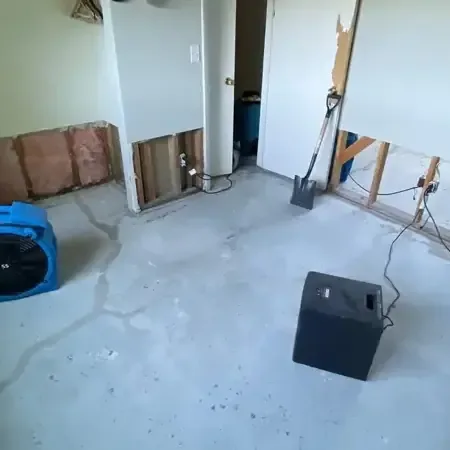
Cleanup and drying for every kind of leak
The restoration team handles one kind of water loss after another, from a river flood to a leaking water heater. Call and describe the damage, and the right service starts there.
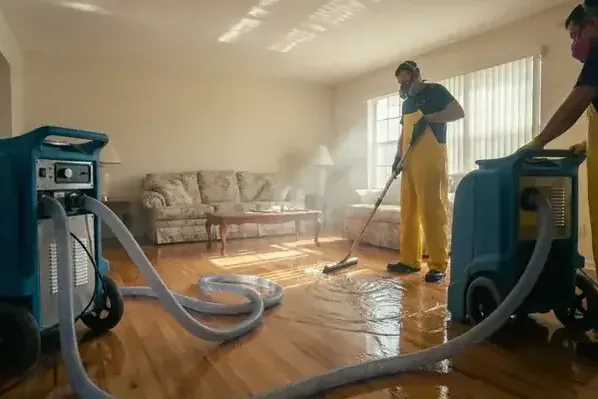 Water Extraction and RemovalPumps and extraction wands pull standing water from floors and carpet before it reaches the subfloor and the lower walls.View service
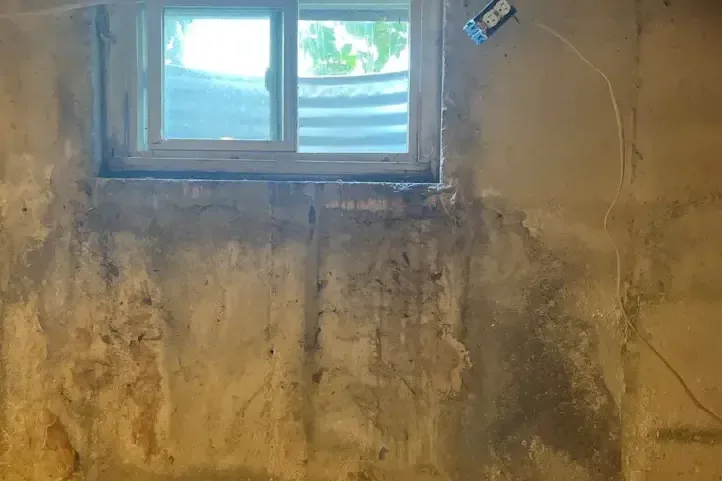 Basement Flooding CleanupA flooded lower level is pumped out, cleared of wet contents and dried so water does not linger in the walls.View service
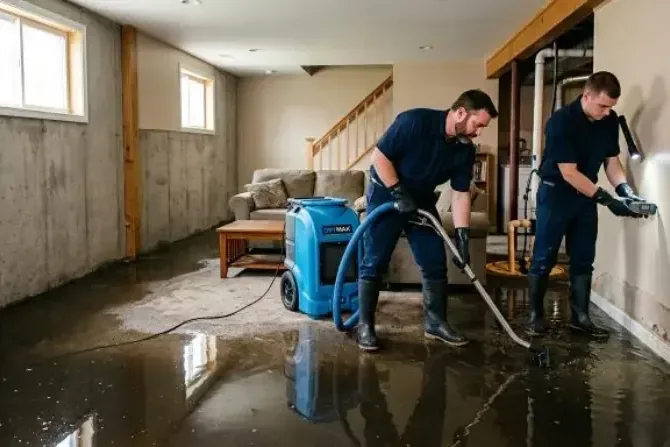 Sump Pump Failure CleanupWhen a pump stops mid storm, the crew removes the overflow and dries the pit area and the foundation walls.View service
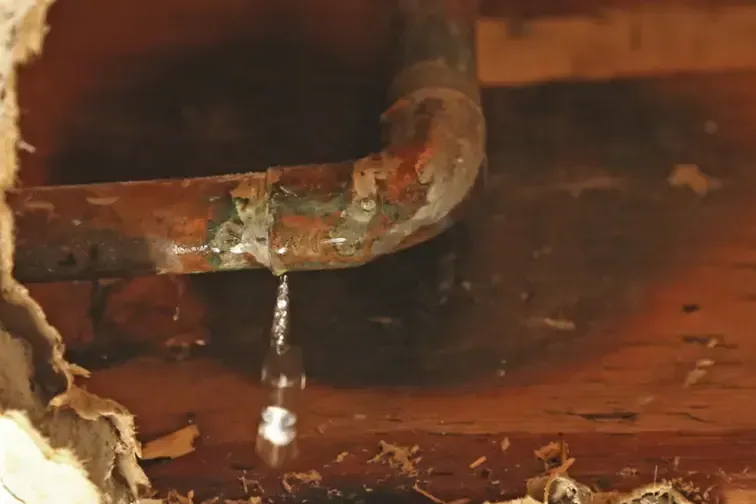
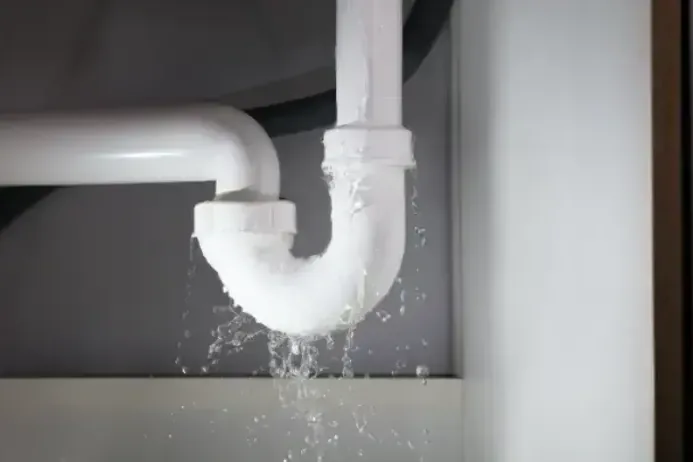 Burst Pipe Water DamageA split pipe soaks walls and ceilings fast. The team opens the wet cavity and dries it before the damage spreads.View service
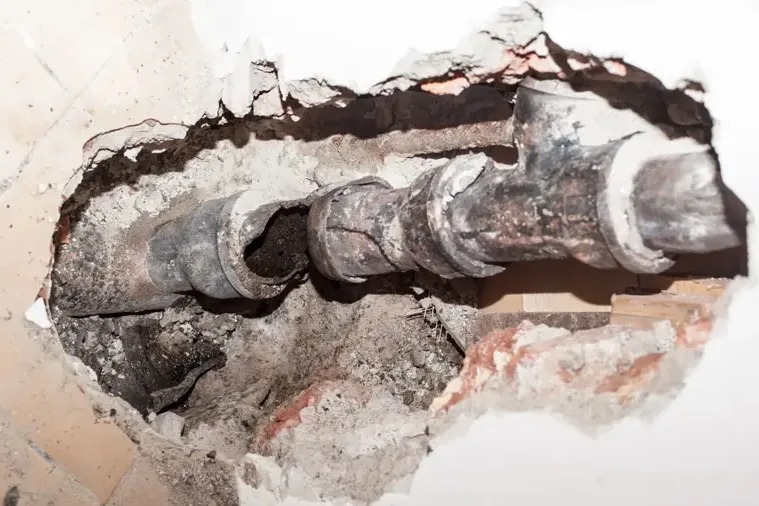 Frozen Pipe Water DamageFrozen pipes split quietly and show the damage when they thaw. Drying starts as soon as the water is stopped.View service
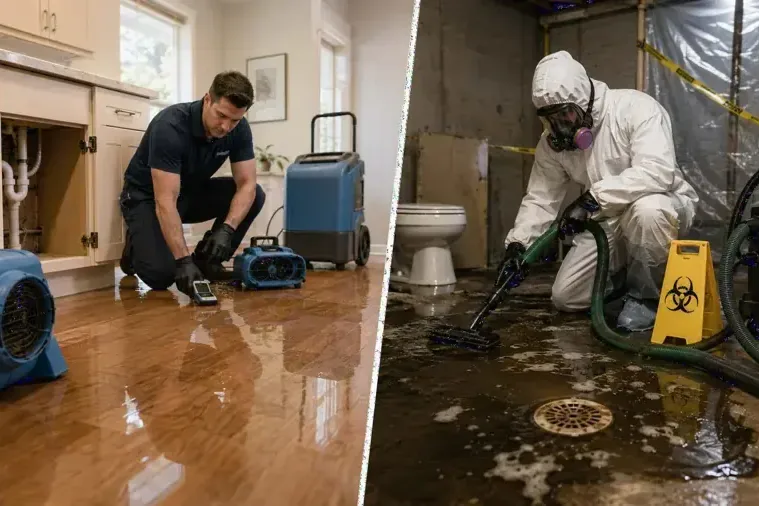 Sewage Backup CleanupSewage backups bring contaminated water indoors. Crews in protective gear remove it, clean the surfaces and disinfect what is left.View service
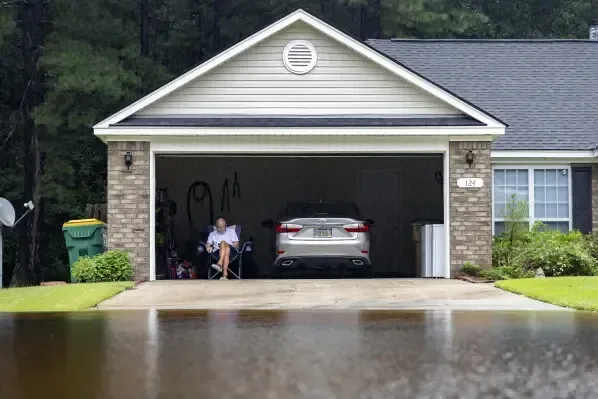 Storm and Flash Flood CleanupFlash flood water leaves silt and debris behind. The crew extracts it, removes ruined materials and dries what can be saved.View service
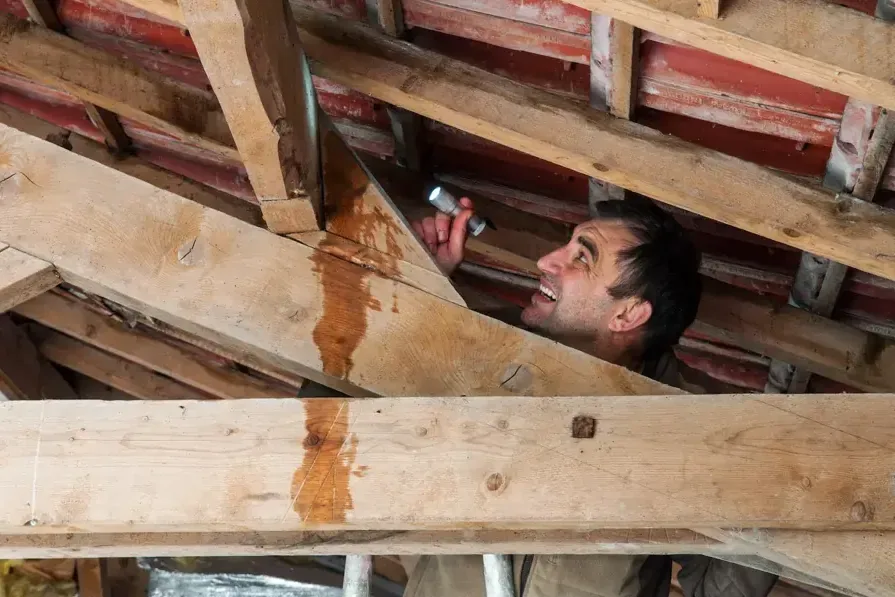 Roof Leak Water DamageA roof leak wets the attic and insulation before any stain shows. The team traces the water back to its entry point.View service
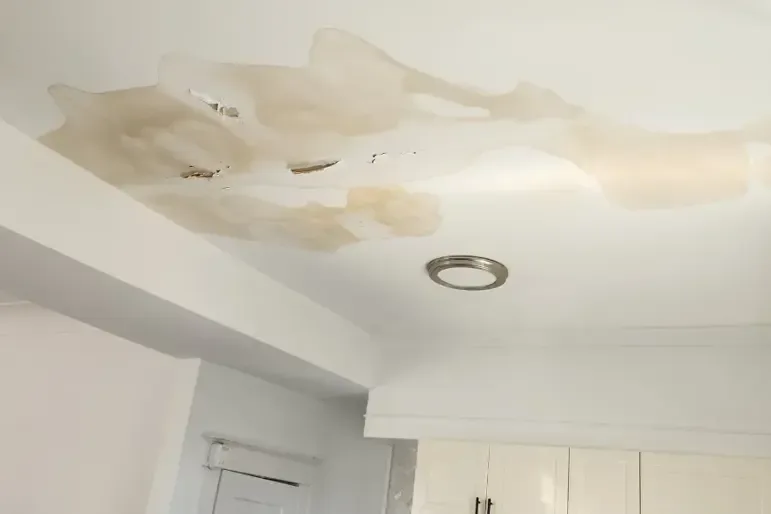
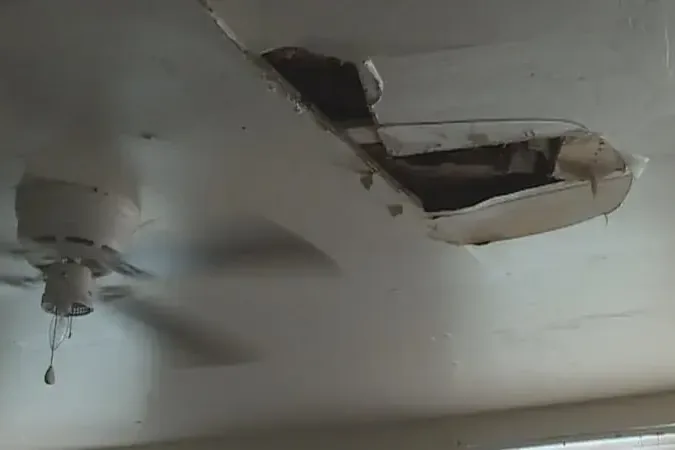 Ceiling Leak Water DamageStains and sagging drywall point to a leak above. The mitigation team finds the source, opens the ceiling and dries it.View service
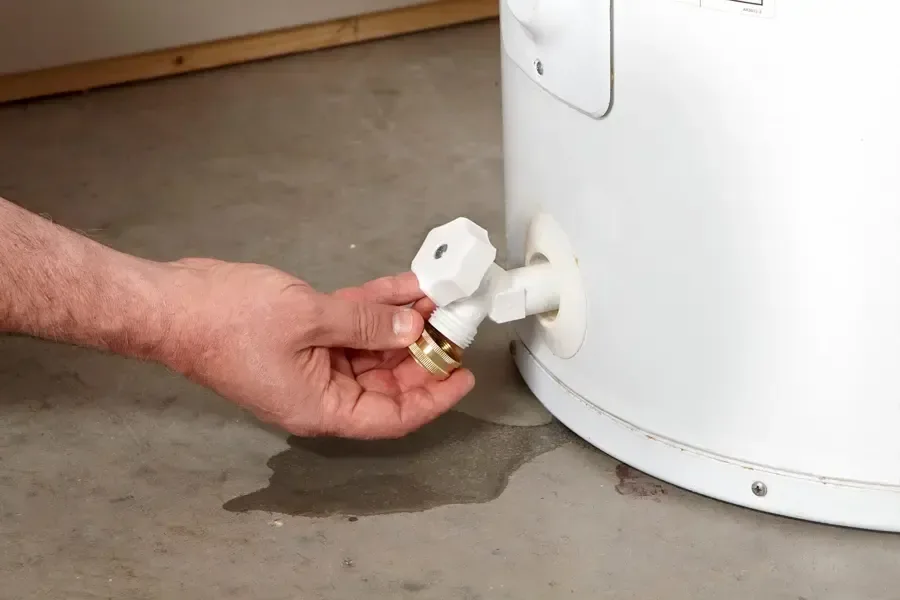 Water Heater Leak CleanupA failed tank can soak the floor and walls around it. The team extracts the water and dries the utility area.View service
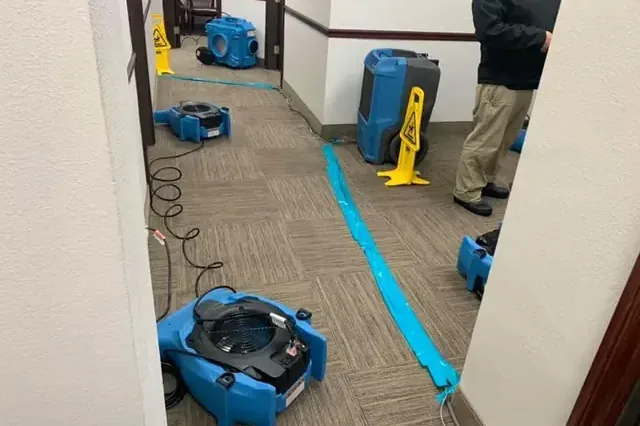
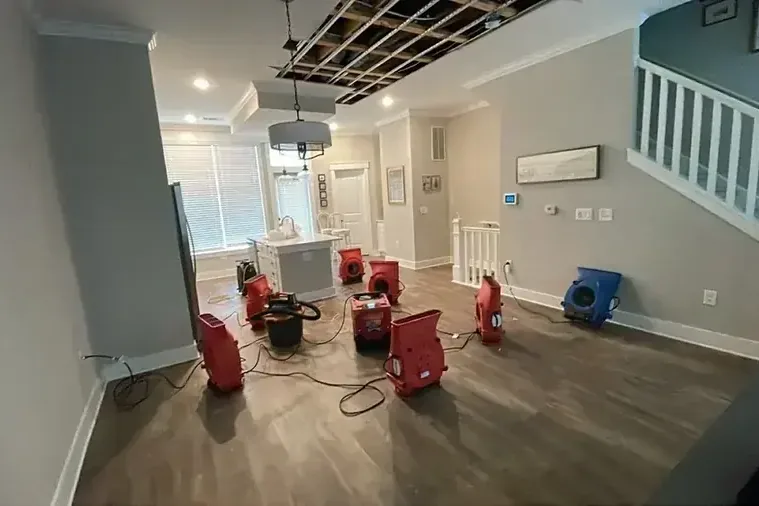 Structural Drying and DehumidificationAir movers and dehumidifiers dry floors, walls and framing, and moisture readings steer the work until the materials are dry again.View service
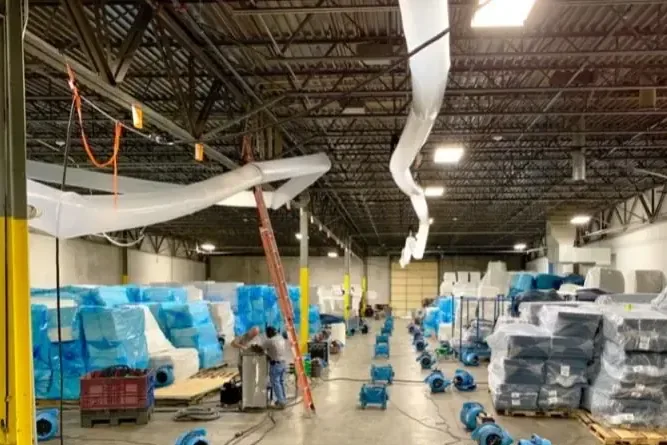 Commercial Water DamageShops, offices and hotel buildings need water out and the doors open again. The team plans the work around the business.View service
Round-the-clock water damage dispatch for Excelsior Springs, MO
Water in the building right now?
Call and describe what happened, and the response team will ask about the water source, the rooms affected and whether anything is contaminated.
(888) 603-7319Talk to the drying team nowA drying team that fits the building
Older houses on the hills and large hotel buildings downtown dry differently. The restoration team reads the materials first, then sets the equipment to match.
- Water out first. Extraction wands and pumps remove the bulk of the water before any drying begins, which keeps the damage from spreading into framing and finishes.
- Readings, not guesses. Moisture meters track every wall, floor and ceiling, so the equipment stays in place until the numbers show the materials are dry.
- Care for old homes. Plaster, trim and original framing in the oldest houses get a gentle approach, with removal limited to what is truly ruined.
- Clear paperwork. Notes, photos and readings are recorded as the work goes, so an insurance claim has the documentation it needs from the start.
What to do while the water is still spreading
- Stay out of the water. Standing water near outlets or a panel can carry current, so keep clear and shut off the power if that is safe.
- Stop the source. Close the main shutoff for a broken pipe or a failed heater, and leave a flood or sewage backup alone.
- Lift what you can. Move small furniture, rugs and electronics to dry ground, and take photos before anything is thrown out.
- Describe it by phone. Explain where the water came from and what it touched, so the crew brings the right pumps and gear.
- Keep the air moving. Open windows if the weather allows and leave the drying equipment running until the readings say the structure is dry.
A standard the drying team follows every time
Every job follows the same order: protect, extract, remove what is ruined, dry and verify. Notes and moisture readings are kept so the endpoint is a number, not a feeling.
Protect
Floors and contents are covered or moved, and power to wet areas is checked before equipment goes in, so the rest of the property stays clean.
Extract
Pumps and extraction wands remove standing water, then moisture meters and a thermal camera show where it traveled into walls and subfloors.
Remove and dry
Ruined drywall, insulation and flooring come out. Air movers and dehumidifiers then run on the wet framing and floors until the readings drop.
Verify
Final readings are compared with a dry area of the same material, and the equipment leaves only when the structure matches it.
The water losses that hit local homes hardest
Flash flood water
When the Fishing River leaves its banks, runoff carries silt into garages, lower floors and storefronts, and it all has to come out.
Split or frozen pipes
Hidden leaks inside walls soak insulation and drywall for a long time before a stain appears, which is why opening the cavity matters.
Sewage backups
Contaminated water from a backed up drain needs protective gear, careful removal and disinfection, and porous materials often cannot be saved.
What water damage cleanup costs here
Cleanup usually starts around $1,200 for one wet room and climbs to $15,000 or more when sewage or several levels are involved. A written scope after the walkthrough sets the real number.
One wet room
- Water extraction and removal
- Air movers and drying
- Moisture readings kept
Finished lower level
- Extraction and demolition
- Wet materials hauled out
- Dehumidifier drying
Sewage or several rooms
- Protective containment
- Disinfection of surfaces
- Full structural drying
Costs follow the area wet, the water type and the materials involved. The scope is written before work starts, with photos and readings an adjuster can use.
Water damage and your claim
Insurance questions come up on nearly every water loss. The crew keeps the records an adjuster asks for and leaves coverage decisions to the policy and the carrier.
- Dated photos of every wet room
- Moisture readings taken at each visit
- A written scope listing the work done
- Notes on the damaged contents and materials
- Receipts for any emergency repairs
If you file on your own
Report the loss to the carrier promptly, describe it as sudden or gradual honestly, and keep damaged materials until the adjuster has seen them.
Do not wait on the claim to start drying. Water left in the structure keeps causing damage, and the photos and readings from mitigation support the file.
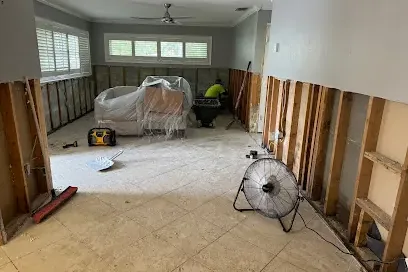
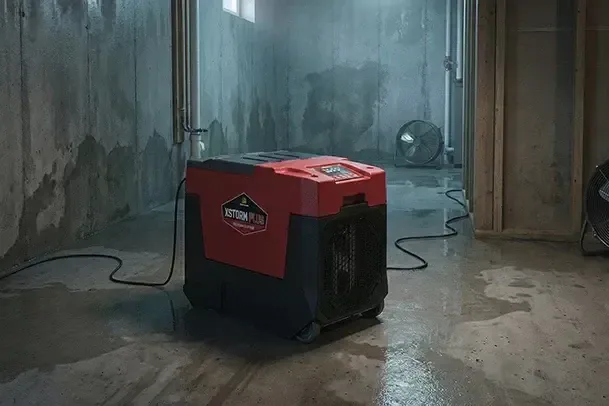
What water damage work looks like on site
Where the restoration team works in town
ZIP code served
Service reaches the downtown districts, the Uplands streets above the river valley and the commercial strips along Highway 69.
Neighborhoods and corridors
Nearby towns served
What floods and soaks homes in this valley
The Fishing River cuts through town from northwest to southeast, and the city's own plan blames the deep valley and the shape of the watershed for repeated flash floods in the central core.
River flash floods
The deep valley, limited flood storage area and shape of the watershed push water through the central core. The city's 2009 plan lists major downtown floods in 1941, 1943, 1947, 1951, 1969 and 1993.
Older Uplands houses
The oldest housing stock sits on small lots along narrow, irregular streets that follow the slope above the river valley, and the city's plan lists the structural integrity of older homes as a main housing challenge.
Midtown drainages and slopes
Mostly postwar single family neighborhoods sit on rolling ground cut by drainages and steeper slopes, so runoff has many paths toward foundations and low spots after a hard rain.
Large downtown buildings
Short blocks give downtown far more building frontage than a typical downtown, and its core holds some of the largest traditional hotel buildings, so one leak can reach a lot of structure.
Low levels fill first
Even the Hall of Waters keeps its mechanical systems in a lower basement level, and its lower level with the historic swimming pool has been especially vulnerable to flooding.
June 3, 2015
Flash flooding sent the Fishing River over its banks, roads and bridges and up against the historic Elms Hotel, stopping just short of a row of historic houses.
Common water damage questions
Water in the building right now?
Describe the damage and the response team will explain the next steps, from stopping the source to setting up the drying equipment.
(888) 603-7319 Explain the damage to the crewHow fast does water damage spread inside a building?
Water wicks into drywall, insulation and framing quickly, and a wet structure can grow mold within a couple of days. That is why extraction and drying should begin as early as the situation allows.
Can flash flood water reach homes away from the river?
Yes. The Fishing River has tributaries, one draining from the north along the Salem Road and Main Street corridor and another west of Titus Avenue, and runoff follows drainages and slopes into low spots. See storm and flash flood cleanup for the work after the water drops.
What does the drying team do first?
Safety comes first: power to wet areas is checked and the source is stopped. Then the crew extracts standing water, maps the moisture with meters and a thermal camera, and plans the equipment for structural drying.
Can wet drywall and flooring be saved?
It depends on the water. Clean water that is caught early often lets hard floors and framing dry in place, while soaked insulation, padding and anything touched by sewage is usually removed.
How much does water damage cleanup cost here?
One wet room with clean water usually runs $1,200 to $3,500. A finished lower level costs $4,500 to $9,000, and sewage or several rooms run $9,000 to $15,000 or more. A written scope sets the real figure.
Is sewage cleanup different from a clean water leak?
Yes. Sewage is contaminated, so the crew wears protective gear, contains the area, removes porous materials that cannot be cleaned and disinfects the surfaces that remain, which makes sewage backup cleanup slower and more careful work than a clean leak.
Do older historic buildings need special care?
They often do. The Uplands hold the oldest housing stock on small lots and narrow streets, and downtown has some of the largest traditional hotel buildings, so removal is kept to what is truly ruined.
Does the crew work with insurance companies?
The crew documents the loss with photos, moisture readings and a written scope, and shares those records with an adjuster. Coverage decisions stay with the policy and the carrier.
Which parts of the area does the restoration team reach?
Service covers Excelsior Springs and ZIP code 64024 across Clay County and Ray County, from the downtown districts to the Uplands, the midtown streets and the commercial corridors along Highway 69 and Isley Boulevard.
Should I start cleaning before calling?
Small safe steps help: shut off the water source, turn off power to wet rooms from dry ground and take photos. Leave extraction, sewage and wet structure to the drying team, because those jobs need equipment and protection.
Wet floors and soaked walls need attention before the damage settles in
The restoration team is ready to pull the water out and start the drying, so describe the damage and get the work moving.
(888) 603-7319Call the restoration team now