Water Extraction and Removal in Liberty, MO
Standing water on carpet, hardwood or a basement slab is pulled with truck-mounted and portable extraction, then the floors and walls are moisture-mapped so drying starts where the water actually went.
(888) 603-7319Get standing water pulled off the floor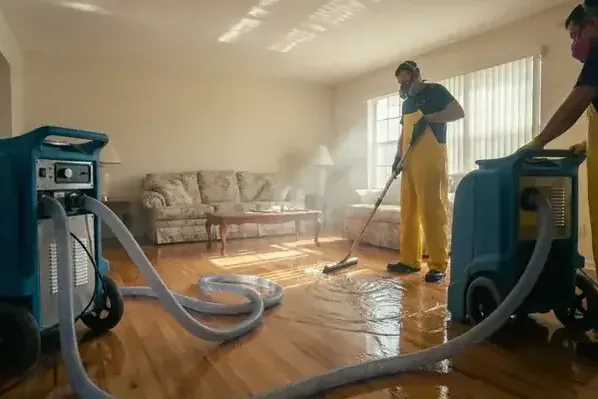
Why water extraction and removal needs a measured dry-out
- Dispatch around the clock. Active water is treated as urgent at any hour, weekends and holidays included, because drywall and subfloor keep wicking until extraction starts.
- Sized to the class of loss. Air movers and LGR dehumidifiers are set by the class of loss under the IICRC S500 drying standard, not by a guess.
- Readings decide the finish. Daily moisture readings track each wet material until it sits within 2 to 4 points of a dry reference in the same home.
- A claim file built during the work. Moisture maps, psychrometric logs and timestamped photos taken before demolition give the adjuster a clear record.
- Lower levels checked, not assumed. Sump pits, floor drains, wall bottoms and the slab edge get metered, not just the spot where water showed up.
First steps for water extraction and removal
- Stop the source. Close the main shutoff or the valve feeding the leak if it is safe to reach.
- Cut power to wet rooms. Switch off breakers only from a dry spot and stay out of water near outlets.
- Lift what can move. Pick up rugs, boxes and electronics, but leave wet carpet in place.
- Take photos first. Photograph every wet room and the source before anything is moved.
What does water extraction and removal cost in Liberty, MO?
In Liberty, MO, water extraction and drying typically runs $1,200 to $8,500, depending on how many rooms are wet, the water category, the flooring and how fast extraction started.
One room, clean water
- Truck-mounted extraction
- Pad and baseboard check
- 3 to 4 days of drying
Several rooms or a basement
- Extraction across rooms
- Baseboards pulled
- Air movers and LGR units
Whole level or gray water
- Pad and laminate removal
- Antimicrobial applied
- Extended drying
Ranges are typical, not a quote: category of water, square footage, material class and how fast drying started move the number most. Run the water damage cost calculator for a closer range.
How water extraction and removal is handled, step by step
Map
Meters and a thermal camera trace the wet edge.
Extract
Truck-mounted units pull the standing water.
Dry
Air movers and LGR dehumidifiers run to the goal.
Verify
Daily readings until materials match the dry reference.
Extraction is the cheapest drying there is. A truck-mounted unit removes far more water from carpet and pad in an hour than air movers evaporate in a day, so the extraction crew pulls every gallon it can before any fan goes down. In Liberty that often means a finished basement, where water spreads under carpet and wicks into drywall along the slab.
How the extraction crew works a flooded floor
The tech who does the walkthrough finds the source, sets the water category and maps how far the water traveled with pinless meters and a thermal camera. Water runs under baseboards and along the slab farther than it looks.
- Truck-mounted extraction for carpet, pad and large floors
- Portable units for upper floors and tight stairways
- Weighted extraction tools that squeeze water out of carpet pad
- Squeegees and wet vacuums on tile, vinyl and bare concrete
Standing water on the floor right now? The extraction crew pumps it out and maps where it spread.
(888) 603-7319Pull the standing water outCarpet, pad, hardwood and concrete
With clean water caught early, carpet can often be floated and dried in place, while soaked pad usually comes out because it is cheap to replace and slow to dry. Laminate swells and seldom survives. Hardwood gets a panel drying system, and a basement slab gets LGR dehumidifiers because concrete gives up water slowly.
After the water is out
Air movers are set to each room's evaporation load and LGR dehumidifiers are added. Readings are taken daily until materials reach the drying goal. For safety around standing water and outlets, the Ready.gov flood safety page is worth a read, and the National Weather Service flood safety tips cover what to do before water rises.
Water extraction and removal across Liberty and Clay County
Coverage runs across ZIP 64068 and 64069, from Courthouse Square and the historic Dougherty-Prospect Heights and Jewell-Lightburne districts out along Kansas Street, Missouri Route 291 and the I-35 corridor to the homes near Rush Creek.
Nearby coverage reaches Gladstone, Kearney, Kansas City, Excelsior Springs, Smithville, Pleasant Valley, Claycomo and Mosby.
Related water damage services
Water Extraction and Removal questions in Liberty, MO
Still dealing with it?
Standing water on the floor right now? The extraction crew pumps it out and maps where it spread.
(888) 603-7319 Pull the standing water outHow fast should water extraction start?
As soon as possible. Water keeps wicking into drywall, pad and framing for as long as it sits, and after 24 to 48 hours mold growth can begin. Extraction comes first, then drying.
Can wet carpet be saved after extraction?
Often, when the water is clean and extraction starts early. Carpet is extracted and floated for drying, while soaked pad is usually replaced. Carpet that held sewage or creek water is removed.
Is a shop vacuum enough for water extraction?
For a small spill, maybe. For a wet room, a shop vacuum leaves most of the water in the pad and subfloor. Truck-mounted extraction and weighted tools remove far more before drying.
How long does water extraction take?
The pump-out itself usually takes part of a day for a room or a basement. Drying afterward runs three to five days for most clean-water losses, longer for concrete or hardwood.
Does insurance cover water extraction?
Extraction after a sudden and accidental loss, such as a burst pipe, is often covered. Flood water and sewer backups are treated differently. Coverage depends on your policy, so check with your own insurer.
What happens to a wet basement slab after extraction?
Concrete holds water and releases it slowly. After extraction, LGR dehumidifiers and air movers dry the slab and the wall bottoms, and readings confirm when it is dry.
Water across the floor? Get extraction going before it wicks.
Every hour of standing water soaks deeper into pad, drywall and the slab. The extraction crew removes it first.
(888) 603-7319Send the extraction crew over