Structural Drying and Dehumidification in Excelsior Springs, MO
Older homes in the Uplands and the historic buildings downtown need controlled drying after a flood. The drying team sets air movers and dehumidifiers and tracks the readings until the structure is truly dry.
(888) 603-7319Get the building dried properly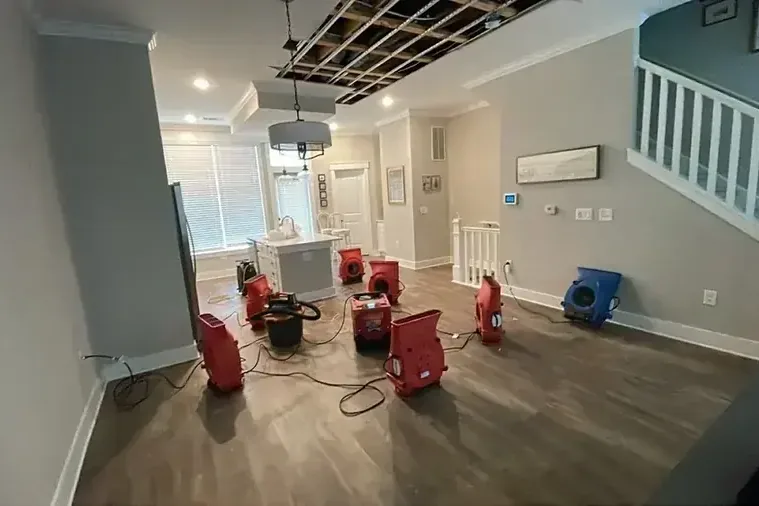
Why structural drying and dehumidification needs a measured dry-out
- Dispatch around the clock. Active water is treated as urgent at any hour, weekends and holidays included, because drywall and subfloor keep wicking until extraction starts.
- Sized to the class of loss. Air movers and LGR dehumidifiers are set by the class of loss under the IICRC S500 drying standard, not by a guess.
- Readings decide the finish. Daily moisture readings track each wet material until it sits within 2 to 4 points of a dry reference in the same home.
- A claim file built during the work. Moisture maps, psychrometric logs and timestamped photos taken before demolition give the adjuster a clear record.
- Lower levels checked, not assumed. Sump pits, floor drains, wall bottoms and the slab edge get metered, not just the spot where water showed up.
First steps for structural drying and dehumidification
- Leave equipment on. Keep the equipment running, because a stopped machine lets moisture settle back.
- Keep doors closed. Closed doors and windows help the dehumidifiers pull moisture out.
- Do not move machines. Equipment is placed by readings, so call the team first.
- Watch for odors. Report a musty smell or new staining right away.
What does structural drying and dehumidification cost in Excelsior Springs, MO?
Structural drying is priced by the drying class, the number of rooms and how dense the materials are. The cards show printed ranges, and the scope names the equipment and the readings used.
Class 1 to 2, one room
- Air movers placed
- Dehumidifier running
- Moisture readings kept
Class 2 to 3, several rooms
- Multi room air movers
- Larger dehumidifier setup
- Frequent readings
Class 4, dense materials
- Specialty drying
- Extended equipment time
- Detailed documentation
Ranges are typical, not a quote: category of water, square footage, material class and how fast drying started move the number most. Run the water damage cost calculator for a closer range.
How structural drying and dehumidification is handled, step by step
Measure
Meters and a thermal camera map the moisture.
Place
Equipment is set to fit each material.
Monitor
Readings are logged and equipment adjusted.
Release
Equipment leaves when materials match a dry area.
Removing the water is only half the job. Floors, walls and framing keep moisture inside long after the surface feels dry, and that hidden water is what causes swelling, odor and mold. Structural drying removes it on purpose, with equipment and measurement.
Why historic buildings need a plan
The lower level of the Hall of Waters, with its historic pool, has been especially vulnerable to flooding, and older homes in the Uplands share the same need for patience. Plaster, old lumber and dense masonry dry slowly, so the equipment is matched to the material instead of rushed.
- Air movers push dry air across floors and wall surfaces
- Dehumidifiers pull moisture out of the air so it does not return
- Meters track every wall and floor and direct equipment moves
- Equipment stays until readings match a dry area of the same material
Floors dry to the touch but still damp inside? The drying team can measure it.
(888) 603-7319Start drying the wet structureControlled drying beats fast drying
Drying too hard cracks wood and plaster, while drying too softly leaves moisture behind. The team adjusts airflow and humidity as the readings change, and keeps notes the adjuster can use.
Where drying fits
Drying follows water extraction in almost every job, and it also finishes a storm flood cleanup or a sewage backup after disinfection.
Structural drying and dehumidification across Excelsior Springs and nearby communities
Structural drying work covers the older Uplands homes, the historic buildings of the Elms District and downtown, the midtown neighborhoods and the commercial buildings along Highway 69 and Isley Boulevard in Excelsior Springs.
The same service nearby: structural drying and dehumidification in Liberty, Kearney, Smithville.
Related water damage services nearby
Structural Drying and Dehumidification questions in Excelsior Springs, MO
Still dealing with it?
Floors dry to the touch but still damp inside? The drying team can measure it.
(888) 603-7319 Start drying the wet structureWhy does a surface that feels dry still need drying?
Moisture hides inside wood, plaster and concrete long after the surface dries. Meters read what the hand cannot feel, and leftover moisture leads to swelling, odor and mold.
What do the drying classes mean?
Class numbers describe how much water was absorbed and how fast it will evaporate. Higher classes involve dense materials or large wet areas, so they need more equipment and more time.
Why are the machines loud and warm?
Air movers and dehumidifiers run continuously to keep air circulating and moisture leaving, and they add heat while working. That noise and warmth are signs the drying is progressing.
How does the team know when drying is done?
Readings are compared with a dry area of the same material in the building. When the wet areas match it and stay there, the equipment is removed.
Can historic plaster and wood be dried safely?
Yes, with patience. Slower airflow and controlled humidity keep old plaster and lumber from cracking, and removal is limited to material the readings show cannot recover.
What records come with the drying?
Dated notes, moisture readings and photos of the equipment are kept and shared with the adjuster so the claim shows what the structure needed.
Hidden moisture keeps damaging the structure
Describe what flooded and what the building is made of, and the team will plan the equipment, the airflow and the readings that confirm it is dry.
(888) 603-7319Call about the drying