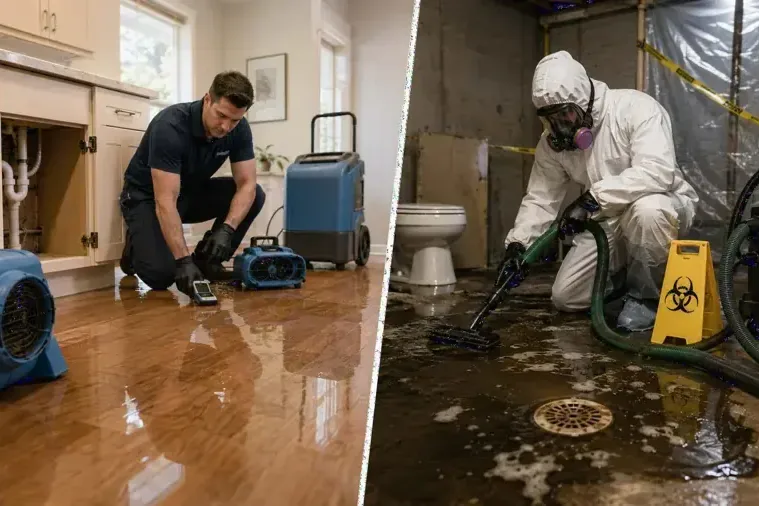
Sewage that rises through a floor drain, tub or toilet turns part of a home into a health hazard. The City of Liberty publishes plain instructions for the moment a backup starts, and those instructions shape both the first steps and the cleanup that follows.
Key takeaways
- The city's FAQ says a backflow preventer closes when the sewer flows beyond capacity, which can occasionally happen in heavy rain.
- While the preventer is closed, household drains should not be used, so no new water goes down sinks, tubs or toilets.
- When the city main is clear, a plumber can check the owner's lateral, the pipe that runs from the house to the main.
- Photos of the damage come before cleanup, and the city encourages insurance that covers sewer backups.
- Sewage is Category 3 water: porous materials come out, hard surfaces are cleaned and disinfected, and the structure is dried to a measured goal.
What the city says about backflow preventers
City of Liberty Utilities maintains the water and wastewater infrastructure inside city limits. Its FAQ explains that a backflow preventer closes when the sewer flows beyond capacity, and that this can occasionally happen during heavy rainfall.
A closed preventer is working as intended. It keeps sewer water from pushing back up into the building, but it also means that water going down a household drain has nowhere to go.
Gurgling fixtures, slow drains in several rooms at once and a sewer smell during a downpour are all reasons to stop using water and check the lowest drain in the house.
Warning signs often show up before sewage reaches the floor.
- Toilets that gurgle when a sink or washing machine drains.
- Slow drains in more than one fixture at the same time.
- A sewer smell near a basement drain or bathroom.
- Water backing up into the lowest tub, shower or floor drain.
Stop using the drains while the preventer is closed
The city's instruction is direct: household drains should not be used while the backflow preventer is closed. Every flush, shower and load of laundry sends more water toward pipes that cannot empty.
Sewage on a floor is a contact hazard. Protective gloves, boots and a mask are the minimum, and hands should be washed with soap and clean water afterward.
Food, dishes and clothing that touched sewage are not safe to use, and children and pets should stay away from the area until cleanup is finished.
If sewage has already reached the floor, the problem has changed from plumbing to contamination. Sewage backup cleanup starts with protective gear and removal of soaked materials, not a mop and a bucket.
- Hold off on showers, dishwashers and washing machines until the heavy rain passes.
- Leave toilets unflushed unless a plumber says otherwise.
- Move rugs, boxes and electronics away from floor drains and low bathrooms.
- Keep children and pets out of any room where water has come up.
The city main or the owner's lateral
The city's FAQ draws a line between two pipes. If the city main is clear, the owner's lateral, which is the pipe running from the house to the main, can be checked by a plumber.
That split decides who looks at what. A clear main points toward the lateral, where roots, a sagging section or a blockage may be the cause.
Roots entering a joint, a section of pipe that has sunk and holds water, and a buildup of grease or wipes are common reasons for a blocked lateral. A camera inspection shows which one is present.
- Ask the city whether the main is flowing normally.
- Have a plumber check the lateral if the main is clear.
- Avoid running water to test the pipe while sewage is on the floor.
- Let cleanup start while the cause is still being sorted out, because sewage on a floor keeps spreading contamination.
Photos first, then cleanup, then insurance
The city advises documenting the damage with photos before cleanup begins. Wide shots of each room, close shots of the waterline and pictures of damaged belongings all help later.
The city also encourages homeowners to carry insurance that covers sewer backups, and it looks at reimbursement requests case by case. A standard homeowners policy may exclude sewer backup unless an endorsement was added, so the policy wording is worth reading early.
Photos taken from the same corners of a room before and after cleanup make it easier to show what was removed.
- Photograph the drain, the floor and the waterline before anything is moved.
- List ruined items room by room, with a rough age and replacement cost.
- Keep receipts for plumbing work, cleanup and any temporary housing.
What sewage cleanup removes and what it saves
Sewage is Category 3 water. It carries bacteria and is treated as unsafe, which changes what can stay in the building.
Porous materials that usually go
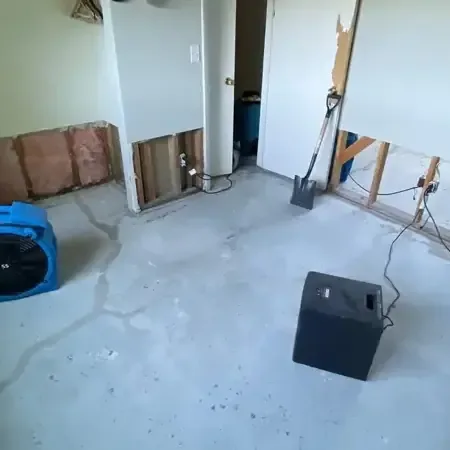
Materials that soak up sewage cannot be made safe by drying alone. They are cut out, bagged and removed.
- Carpet and carpet pad.
- Drywall and insulation that wicked water above the floor.
- Particleboard cabinet bases and baseboards.
- Cardboard boxes, mattresses and upholstered furniture.
Hard surfaces and framing that are cleaned
Concrete, tile, sealed wood and framing are cleaned and disinfected once the contaminated material is gone. The extraction crew pulls standing water first, then the affected area is treated section by section.
Damp material left in place can grow mold within 24 to 48 hours, so removal is not something to postpone.
- Concrete floors are scrubbed and treated, then dried.
- Sealed tile and stone are cleaned and disinfected.
- Studs and plates that stay in place are cleaned and sprayed with an antimicrobial treatment.
- Hard plastic bins and tools are washed and disinfected.
Drying the structure afterward
Cleaning removes the contamination, and drying removes the moisture left in framing, subfloor and concrete. The drying team places air movers and dehumidifiers and keeps them running until readings match a dry reference.
Readings are taken again at each visit rather than guessed. Structural drying is finished when the numbers say so, not when the surface feels dry.
- Dehumidifiers pull moisture out of the air so walls and floors can release theirs.
- Air movers push dry air across wet surfaces.
- Wall cavities may be opened where readings stay high.
Keeping roof water out of the sanitary sewer
The same FAQ states that gutters must never be routed to the sanitary sewer. Roof water that enters that pipe adds to the load during the storms that push a system past capacity.
- Downspouts should discharge outdoors and away from the foundation.
- Plumbers also ask where a sump pump discharges, since that water belongs outdoors rather than in a household drain.
- Water that comes in through a wall or window instead of a drain is a different job, covered under basement flooding cleanup.
Questions
Is it safe to flush the toilet during a heavy rain backup?
The city says household drains should not be used while the backflow preventer is closed. Toilets, sinks, tubs and washing machines all send water toward the same blocked sewer.
Who checks the pipe after a sewer backup?
If the city main is clear, a plumber can check the owner's lateral, which is the pipe from the home to the main. Asking the city about the main comes first.
Does homeowners insurance cover a sewer backup?
Coverage depends on the policy. The city encourages insurance that covers sewer backups and looks at reimbursement requests case by case, so photos and receipts help either way.
Can carpet be saved after sewage reaches it?
Carpet and pad that sewage has soaked are normally removed because they are porous and cannot be made safe by drying. Hard flooring may be cleaned and disinfected instead.
How long does drying take after the cleanup?
It depends on what the water reached. Drying continues until moisture readings match a dry reference, and fast removal of wet material shortens the job.
Why does the backflow preventer close?
It closes when the sewer flows beyond capacity so that sewer water does not push back into the building. The city's FAQ says this can occasionally happen in heavy rainfall.