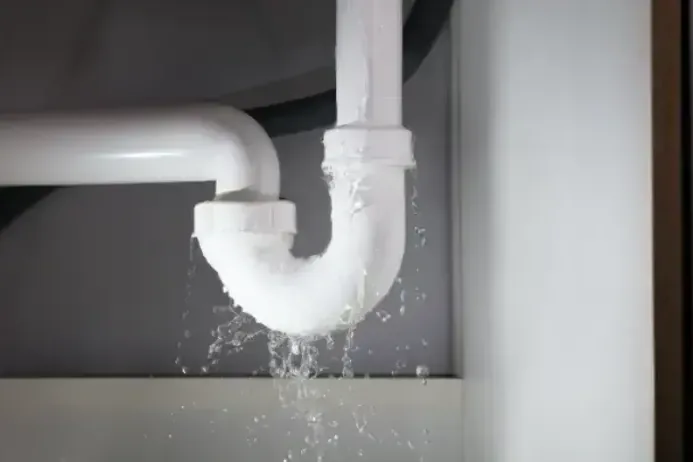
A water line break can mean a geyser in the street, a dry faucet or a wet ceiling, and each one points to a different fix. The City of Liberty handles breaks in its own lines, while a break inside a house is for the household to stop and dry.
Key takeaways
- City utilities crews respond to water line breaks 24/7, according to the city's page on water line breaks.
- Low pressure, no water or discolored water often points to a city line, while a wet wall or ceiling points to a pipe inside.
- The first job at home is closing the main shutoff, then photographing the damage before anything is moved.
- Clean supply water becomes a bigger problem the longer it sits, so extraction and drying start right away.
- When service returns after a city repair, faucets should be opened slowly and checked for new leaks.
When the break is in the street
City utilities crews respond to water line breaks 24/7, according to the city's page on water line breaks. A break in a city line tends to show up as sudden low pressure, no water at all or discolored water from the tap.
Water bubbling up through pavement or pooling at a curb is a reason to report the break to the city. What happens inside the house stays with the owner.
When the break is inside the house
A break inside shows up as water where it should not be: a dark patch on drywall, a ceiling stain, a soft floor or the sound of running water when nothing is on.
Supply pipes are under pressure, so even a small split can release a lot of water over a night.
Small leaks inside walls can run for days. The signs are subtle: a slight rise in the water bill, a faint stain or a floor that feels spongy.
- Hissing or rushing sounds inside a wall point to a pressurized supply pipe.
- A water meter that keeps moving with every fixture off suggests a hidden leak.
- Wet baseboards or bubbling paint on one wall can trace the path of a leak.
- A ceiling stain that grows under a bathroom or kitchen often means a failed fitting above.
Why a pipe inside the house breaks
Pipes fail for ordinary reasons, and a break rarely has a single cause.
Knowing the cause matters for the repair, but it does not change the first job, which is stopping the water.
- Freezing, when water in a pipe expands and splits it.
- Corrosion or fatigue at a joint or fitting.
- Water pressure that stays high and strains connections.
- Movement of framing that stresses a pipe.
- A loose or failed connection at a fixture, supply line or water heater.
Find and close the shutoff
Stopping the water comes before anything else. The main shutoff is usually where the supply enters the house, near the meter, in a basement or utility room, or in a garage.
Knowing the location ahead of time saves a frantic search during a break, so it is worth finding before one happens.
- Turn the main valve clockwise until it stops.
- Open a faucet at the lowest point to drain what remains in the pipes.
- Switch off power to wet rooms at the breaker if outlets or fixtures are wet and the panel itself is dry.
- Photograph the break and the water before moving anything.
What to photograph and write down
Good records are made while the damage is still visible. They support the repair, the cleanup and any insurance claim.
Photos taken before the plumber opens a wall show the original condition. A short video that pans across each wet room often captures more than several still shots.
- The pipe or fitting that failed, before it is repaired.
- Every wet room, with wide and close shots.
- Damaged belongings, with a note of age and approximate cost.
- The water meter reading, if the break was outside the house.
- Names and dates for the plumber and the cleanup work.
Who to call, and in what order
A water line break involves several different jobs, and each belongs to a different professional.
- The city, for a break in a city line or a problem at the meter.
- A plumber, for the broken pipe or fitting inside the house.
- The restoration team, for extraction, drying and removal of wet materials.
- The insurer, to report the loss and ask about coverage.
- An electrician, if outlets, fixtures or the panel got wet.
Extraction and drying after a line break
Burst supply pipes release clean water at first, but the label does not last. Water that sits on flooring and soaks into building materials picks up dirt and bacteria.
Standing water
The extraction crew pumps or vacuums standing water first. Water extraction limits how far moisture wicks into drywall, baseboards and carpet pad.
Wet-dry vacuums handle shallow water, while portable pumps and truck-mounted units handle deeper water. Carpet pad is usually removed, since it holds water long after the carpet looks dry.
Walls, floors and cavities
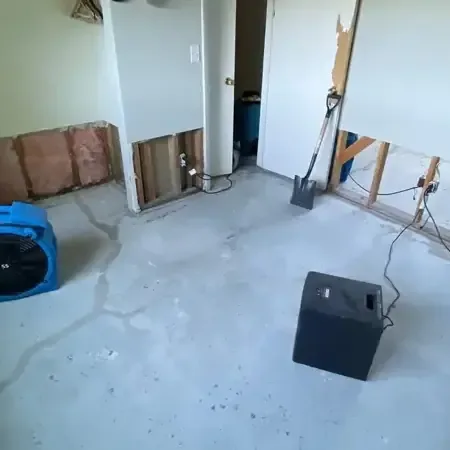
Supply water runs down inside walls and spreads under flooring, so surface dryness is not enough. Moisture meters and thermal imaging show where it traveled, and burst pipe water damage work follows the readings.
- Baseboards come off so wall bottoms can dry.
- Wet drywall or insulation is cut out where it will not dry fast enough.
- Subfloors and framing are dried with air movers and dehumidifiers.
- Readings continue until they match a dry reference.
Before water service returns
After a city repair, water service comes back and air and sediment can move through household pipes. Faucets should be opened slowly, one at a time, and run until the water clears.
A water heater should stay off until the tank is full again, because heating elements can burn out when they run dry.
- Turn the main valve back on slowly and watch for leaks at fittings.
- Check under sinks, at the water heater and at appliance hookups for new drips.
- Look at the ceiling below any upstairs bathroom, because a loose fitting can show up there.
- Keep structural drying readings going until walls and floors are dry.
Questions
How can an owner tell a city line break from a break inside the house?
Low pressure, no water or discolored water usually points to a city line, and water bubbling at the curb confirms it. Wet walls, ceilings or floors point to a pipe inside.
Who repairs a water line break in Liberty?
City utilities crews respond to breaks in city lines. A break inside the house is repaired by a plumber, and the cleanup is separate work.
Is water from a burst supply pipe safe to handle?
It starts out clean, but it picks up contamination as it soaks into materials. Gloves and boots are sensible, and electrical hazards come first.
Should drywall be removed after a pipe break?
Not always. Drywall that stays wet or has soaked up water is usually cut out, while drywall that was only splashed can often be dried in place. Moisture readings decide.
What should be checked when water service comes back?
Open faucets slowly, watch for drips under sinks and at the water heater, and look at ceilings below bathrooms. Any new stain means the main should be closed again.
Does a burst pipe always mean the ceiling will come down?
No. Many pipe breaks wet only the floor or one wall, but a ceiling that sags with trapped water can fall and should be treated as a hazard.