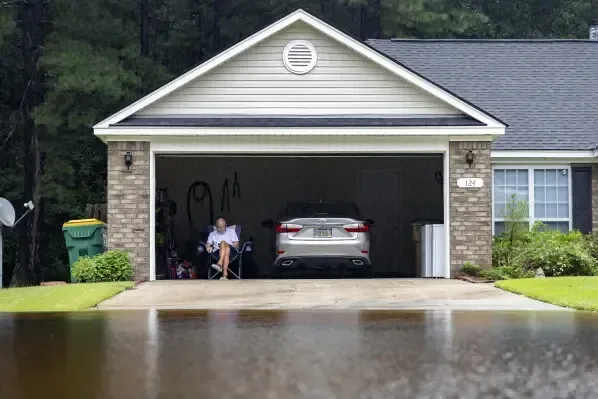
Smithville sits along the Little Platte River, which is dammed just east of town to form Smithville Lake. That lake was built primarily for flood control, and it says nothing about the rain that runs off roofs, driveways and yards into a single building.
Key takeaways
- Smithville Lake is a 7,190 acre reservoir built and run by the Kansas City office of the U.S. Army Corps of Engineers, primarily for flood control.
- A flood control reservoir does not stop rain from running off roofs, yards and driveways toward a building.
- Stopping the source and shutting off power in wet areas come before cleanup.
- Runoff is treated as contaminated water, so porous materials are removed and hard surfaces are cleaned.
- Drying continues until moisture readings match a dry reference.
A city beside a flood control reservoir
Smithville Lake covers 7,190 acres and is the largest body of water in the Kansas City metropolitan area. The U.S. Army Corps of Engineers built it primarily for flood control, with construction of the dam beginning in 1972, the dam completed in 1977 and the lake beginning to fill in 1979.
The city counted 10,406 residents at the 2020 census. The vast majority of the city is in Clay County, with a smaller portion in Platte County.
The lake also provides the city's water supply. None of that describes what happens at one house during one storm.
A reservoir handles river flow. Runoff from a roof, a driveway or a sloping yard follows the ground, so after a downpour water can find its way into any building, wherever it sits.
How runoff gets into a building
In a long rain, ground that is already soaked cannot take any more, and the extra water runs along the surface.
After a heavy storm, water usually enters at a few predictable points.
- Doors and thresholds on the low side of the house.
- Window wells that fill faster than they drain.
- Cracks in foundation walls and joints between wall and floor.
- Garage floors where a driveway slopes toward the door.
- Floor drains when a drain connection backs up.
- Cracks around pipes and cables that pass through a foundation wall.
Grading, gutters and downspouts
Most runoff problems start at the roofline and the ground around the foundation. Gutters that overflow, downspouts that drop water beside the wall and soil that slopes toward the house all send rain where it does not belong.
A walk around the house during a light rain shows where water collects, and fixing those spots costs far less than a cleanup.
After a storm, a quick check of gutters for debris, loose sections and standing water can catch problems before the next downpour.
Soil settles over time, especially beside a foundation, and a shallow trench of settled soil can turn into a channel that points at the wall.
- Extend downspouts so water leaves the foundation area.
- Keep gutters clear of leaves and seed pods.
- Fill low spots near the foundation and slope soil away from the wall.
- Keep window wells clear and covered.
- Check the seal at the garage threshold.
Stop the source and protect the structure
The first job is to keep more water from entering and to keep people safe around it.
Sandbags are heavy and slow to place, so plastic sheeting and a squeegee can help at a small opening while the rain continues. Anyone placing them should stay out of moving water.
- Shut off power to wet areas at the breaker if the panel is dry.
- Move furniture, rugs and electronics out of the wet area.
- Block the entry point with sandbags or plastic if it is safe to do so.
- Photograph the waterline and the damage before anything is moved.
- Keep children and pets out of the wet area.
Extraction and removal
Runoff carries soil and sometimes sewage, so it is handled as contaminated water.
Pumping and extracting
The extraction crew removes standing water with pumps and wet vacuums. Water extraction goes first because every inch of water left in drywall and flooring keeps wicking upward.
A wet-dry vacuum handles shallow water, while a submersible pump clears deeper pools. Pumping is done steadily so that walls are not stressed by a sudden drop in the water level.
What gets removed
Porous materials that soaked up contaminated water usually cannot be made safe by drying alone.
- Carpet and pad.
- Insulation and low sections of drywall.
- Cardboard boxes and upholstered items.
- Particleboard cabinet bases and baseboards.
Hard surfaces and framing
Concrete, tile, sealed wood and framing are cleaned, disinfected and dried in place. Metal and plastic items can usually be washed and reused.
Drying to a measured goal
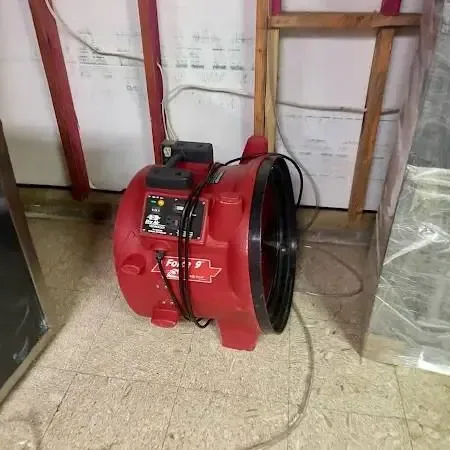
After removal, air movers and dehumidifiers dry the framing, subfloor and concrete. Storm and flood cleanup ends when readings match a dry reference, not when the room feels dry.
Damp material left behind can grow mold within 24 to 48 hours, which is why the drying team keeps taking readings at each visit.
Dry-out time depends on how long water stood, how deep it got and what it soaked into, so no single timeline fits every house.
- Air movers are placed to push dry air across wet floors and walls.
- Dehumidifiers pull moisture out of the air so materials can release theirs.
- Wall cavities are opened where readings stay high.
- Readings are logged at each visit.
Insurance questions after runoff
Policies treat flood, surface water and water backup differently. Standard homeowners policies commonly exclude flood, so the wording and the source of the water decide what applies.
A written record of the day helps: when the rain began, when water entered, where it came from and what was done. That record answers most of the questions an adjuster asks.
More about local cleanup options is on the local water damage pages.
- Ask the insurer how it classifies water that entered from the yard.
- Keep photos, receipts and the drying log together.
- List damaged belongings by room with an approximate age and cost.
- Note when the rain began and when water first entered.
Questions
Does Smithville Lake protect houses from runoff?
The lake was built primarily for flood control by the U.S. Army Corps of Engineers. It does not stop rain from running off roofs, driveways and yards into a building.
Is runoff water in a house safe to touch?
It is treated as contaminated. Gloves, boots and a mask are sensible, and power to wet areas should be shut off first.
What is removed after storm runoff gets inside?
Porous materials that soaked up the water, such as carpet, pad, insulation and low drywall, are usually removed. Hard surfaces and framing are cleaned and dried.
How long does drying take?
It depends on how far the water spread. Drying continues until moisture readings match a dry reference.
Does homeowners insurance cover storm runoff?
It depends on the policy and how the water entered. Many policies exclude flood, so reading the wording and asking the insurer early helps.
Where should downspouts discharge?
Away from the foundation, so roof water does not collect beside the wall. A longer extension or a splash block can carry it farther from the house.