Storm and Flash Flood Cleanup in Smithville, MO
Smithville sits along the Little Platte River next to Smithville Lake, a reservoir built primarily for flood control by the U.S. Army Corps of Engineers. When heavy rain still sends runoff into a building, extraction and drying come first.
(888) 603-7319Clear storm water from the building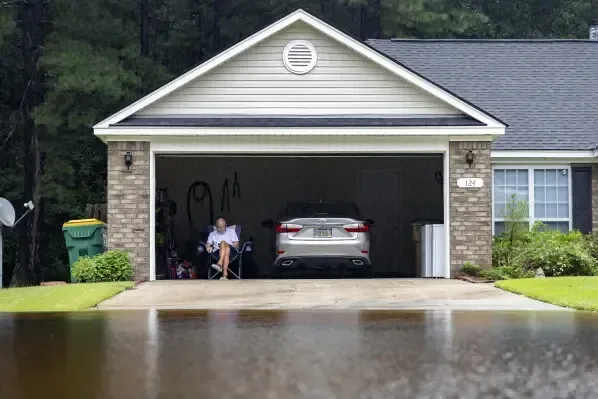
Why storm and flash flood cleanup needs a measured dry-out
- Dispatch around the clock. Active water is treated as urgent at any hour, weekends and holidays included, because drywall and subfloor keep wicking until extraction starts.
- Sized to the class of loss. Air movers and LGR dehumidifiers are set by the class of loss under the IICRC S500 drying standard, not by a guess.
- Readings decide the finish. Daily moisture readings track each wet material until it sits within 2 to 4 points of a dry reference in the same home.
- A claim file built during the work. Moisture maps, psychrometric logs and timestamped photos taken before demolition give the adjuster a clear record.
- Lower levels checked, not assumed. Sump pits, floor drains, wall bottoms and the slab edge get metered, not just the spot where water showed up.
First steps for storm and flash flood cleanup
- Stay out of the water. Floodwater can hide debris and electrical hazards, so wait until it is safe to enter.
- Cut power to wet areas. Turn off breakers from a dry spot and keep away from submerged outlets and cords.
- Lift valuables up. Move papers, electronics and small furniture to dry, high surfaces.
- Photograph and request help. Record the water level and damage, then request pumping and drying.
What does storm and flash flood cleanup cost in Smithville, MO?
Storm and flash flood cleanup usually costs between $3,000 and $18,000 or more, depending on how much of the building flooded, the water category and the materials affected.
Garage or small area
- Runoff pumped out
- Hard floors cleaned
- Area dried
Basement level
- Soaked materials removed
- Surfaces sanitized
- Dehumidifiers run
Several rooms or levels
- Wide material removal
- Sanitizing throughout
- Extended monitoring
Ranges are typical, not a quote: category of water, square footage, material class and how fast drying started move the number most. Run the water damage cost calculator for a closer range.
How storm and flash flood cleanup is handled, step by step
Pump
Water is cleared from the floor.
Remove
Soaked porous materials are bagged out.
Sanitize
Surfaces are cleaned and treated.
Dry
Equipment runs until readings are normal.
Rain does not need a river to cause damage. Runoff from a downpour can cross a driveway, slip under a garage door or pour through a window well, and the cleanup begins once the water can be reached safely.
Floodwater is not clean water
Water that crosses yards and driveways gathers soil, fertilizer, oil and waste. It is handled as contaminated, which means soaked carpet, pad and low drywall are usually removed instead of dried in place.
- Pumps and extractors clear the water
- Soaked porous materials are bagged and removed
- Hard surfaces are cleaned and sanitized
- Remaining framing and concrete are dried
Rain pushed water into the garage or lower level? Pumping is the first job.
(888) 603-7319Clear the storm waterDrying the structure
Once the water and ruined materials are out, air movers and dehumidifiers dry what remains. Readings are taken at each visit, and equipment stays until framing, subfloor and concrete are back to normal. The first step is always water extraction.
When the pump or drain gives out
Heavy rain can overwhelm a pump or a floor drain. For that side of the problem, see sump pump failure cleanup.
Storm and flash flood cleanup across Smithville and nearby communities
Storm cleanup covers Smithville properties wherever runoff has entered, from garages and storefronts around Main Street to buildings along Route DD toward the lake and on the west side by U.S. Route 169.
The same service nearby: storm and flash flood cleanup in Liberty, Kearney, Gladstone.
Storm and Flash Flood Cleanup questions in Smithville, MO
Still dealing with it?
Rain pushed water into the garage or lower level? Pumping is the first job.
(888) 603-7319 Clear the storm waterIs storm water considered contaminated?
Yes. Runoff carries soil, chemicals and waste from yards and roads, so it is treated as contaminated and the porous materials it soaked are removed.
Can carpet be saved after a flash flood?
Generally not. Carpet and pad that sat in floodwater are removed, though hard flooring can often be cleaned, sanitized and dried in place.
How is a flooded garage handled?
Water is pumped out, the slab and walls are cleaned and stored items are sorted. Anything absorbent that sat in the water is usually discarded, and the concrete is dried and checked.
Should the power be turned off?
Yes, if it can be done from a dry spot. Never stand in water to reach a panel, and keep clear of outlets and cords that are submerged.
What can be saved after storm water?
Hard goods such as metal tools, plastic bins and sealed furniture can usually be cleaned. Paper, fabric, cardboard and padded furniture are typically discarded after contact.
How soon should the drying start?
As early as the water can be reached safely. Moisture keeps moving into drywall and framing, and delays make more materials unsalvageable.
Water that came in with the storm needs more than a mop.
The extraction crew pumps the water out, removes soaked materials and dries the structure so nothing stays wet behind the walls.
(888) 603-7319Request storm cleanup