North Oak Trafficway hosts much of the area's shopping in Gladstone, a compact city of 8.06 square miles and 27,063 residents at the 2020 census. When water gets into a business there, the fastest dry-out is also the one that costs the fewest days of lost sales.
Key takeaways
- A business water loss is a race between moisture spreading through ceilings, walls and flooring and the days a space stays closed.
- The first moves are shutting off the water, protecting stock and photographing the damage.
- Drying in phases can keep part of a space open while the wet section is contained and dried.
- Where businesses share walls or a ceiling space, water can move into neighboring units.
- Moisture readings, not appearances, decide when a space is ready for reconstruction.
Why a storefront loss moves fast
A storefront packs stock, fixtures, flooring and ceiling tiles into a small footprint, and water finds every one of them. Carpet tile, drywall and cardboard stock absorb moisture quickly.
Shopping along North Oak Trafficway means customers expect doors to be open, so owners feel the pressure to reopen early. Drying properly is what keeps a reopening from turning into a second closure.
Water damage in a business is rarely limited to the room where it starts. Ceiling space, wall cavities and floors link rooms in ways that cannot be seen from the sales floor.
- A roof leak over a sales floor or storeroom.
- A restroom supply line or toilet overflow.
- A failed water heater in a back room.
- A sprinkler or fire line that opened.
- An air conditioning condensate line that backed up.
The first moves for a business owner
The first steps are simple and apply to almost any water source: a supply break, a failed water heater, a roof leak or a sprinkler line.
Electrical equipment in or near standing water should be left alone until the power is off, and fast water extraction limits how far moisture wicks into walls and stock.
- Shut off the water at the valve and, if needed, cut power to wet circuits at the breaker.
- Move inventory, paper records and electronics off the floor and away from dripping ceilings.
- Photograph the source, the wet areas and damaged stock before anything is moved.
- Tell the property manager or landlord, since shared plumbing and roofs are often theirs.
- Notify the insurer and ask what the commercial policy says about business interruption.
Phased drying that keeps part of the space open
Commercial drying is planned around how the business works. Commercial water damage crews divide a space into zones and dry them in order.
Zoning the space
The drying team maps wet and dry areas with moisture meters. A sales floor that stayed dry can often stay open while a back room or one wall of the store is worked on.
Containment and air control
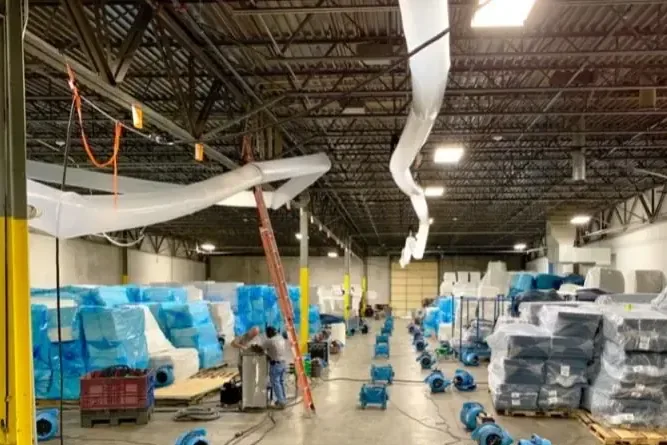
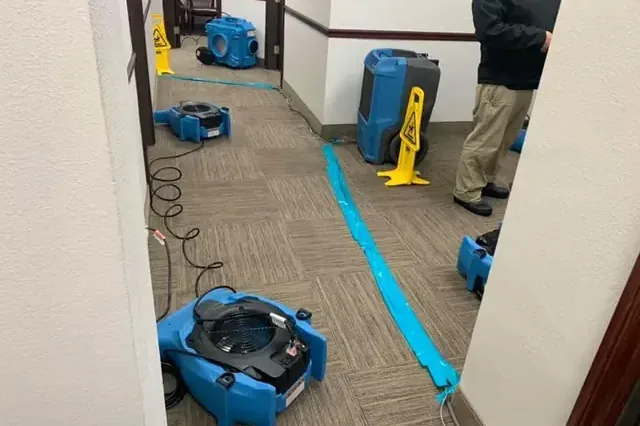
Plastic barriers and negative air keep dust and humid air from drifting into the open section. Dehumidifiers and air movers run in the contained zone, and ducts are checked so wet air does not travel.
- Barriers are placed at doorways and along open ceiling lines.
- Noise from equipment is planned around business hours where possible.
- Cords and hoses are routed so customers and staff can walk safely.
Documenting moisture
Daily readings show whether materials are drying. The log also becomes the record that tells an insurer and a landlord what was wet and when it was dry.
- Readings are logged by room and by material.
- Photos are matched to each reading location.
- The log shows when each zone reached its dry goal.
What gets removed and what gets dried
Not every wet material in a business has to go. The rule is simple: materials that dry quickly and are not contaminated stay, and materials that hold water or have been contaminated are replaced.
Fixtures and shelving are often built from particleboard, which swells when wet and rarely recovers. Metal shelving can usually be cleaned and reused.
- Wet ceiling tiles and insulation are usually removed.
- Carpet tile can sometimes be lifted, dried and reset, while glued down carpet is often replaced.
- Drywall with high readings after drying is cut out and replaced.
- Concrete floors and framing are dried in place and tested before anything is rebuilt.
- Stock that cannot be cleaned is photographed and listed for the claim.
- Ceiling grid and metal framing can often be cleaned and reused when they were not contaminated.
Shared walls and neighboring units
Where businesses share a wall or a ceiling space, water does not stop at the lease line. It follows the path of least resistance through wall cavities, pipe chases and ceiling plenums.
That makes communication part of the job. The restoration team can take readings in the neighboring space with permission, so a hidden problem does not turn into a dispute.
- Readings are taken on both sides of a shared wall.
- Ceiling space above neighboring units is checked.
- Plumbing chases and floor transitions are checked for moisture.
Records and downtime
Some commercial policies include business interruption coverage, and the wording on waiting periods and covered causes varies. Reading it early helps an owner decide how much of the space to try to keep open.
A written drying log, photos of the source and a list of damaged stock make the claim easier to process. The structural drying readings double as proof of when the space was safe again.
Landlords and tenants often split responsibility, so a short written summary of what happened and when helps both sides.
Getting ready for the next leak
A few habits reduce the damage from the next leak, whether it comes from the roof, a restroom or a water heater.
A short written plan, kept with the lease, shows staff what to do in the first moments of a leak: where the shutoff is, who to notify and which stock moves first. It also tells the restoration team which areas matter most to keep running.
- Keep a copy of the shutoff locations posted where staff can find it.
- Store inventory off the floor wherever shelving allows.
- Check ceiling tiles and under sinks regularly for stains.
- Keep a list of the landlord, plumber and insurer contacts in one place.
Questions
Can a store stay open while water damage is being dried?
Sometimes. If the wet area can be contained with barriers and the open section stays dry, drying in phases lets part of the space keep operating.
Who is responsible for water damage in a shared building?
It depends on the lease and where the water came from. A landlord often owns shared roofs and plumbing, while the tenant owns contents and improvements.
How fast does water damage a retail space?
Carpet, drywall and cardboard stock absorb water within hours, and moisture keeps traveling into walls and ceilings. Extraction and drying start as soon as the source is stopped.
What documents help with a business water loss claim?
Photos of the source and damage, a list of ruined stock, receipts, and the daily moisture log from the drying team all help.
How do owners know when drying is finished?
Moisture readings on walls, ceilings and floors match a dry reference. Looking dry is not enough, because framing and subfloors can hold water that stays hidden.
What should be unplugged or moved first after a leak?
Anything on the floor or under a dripping ceiling, starting with stock, paper records and electronics. Power to wet circuits should be turned off at the breaker rather than by touching wet equipment.