Water Extraction and Removal in Gladstone, MO
When water covers a floor, the extraction crew pulls it off the surface and out of the carpet and pad, then checks the subfloor and wall bottoms with meters so the drying plan starts from readings.
(888) 603-7319Get the standing water pulled out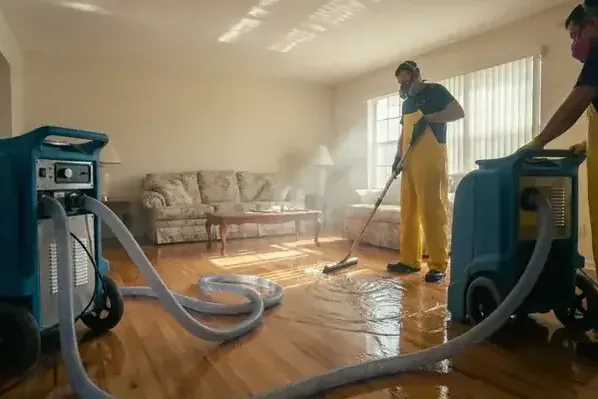
Why water extraction and removal needs a measured dry-out
- Dispatch around the clock. Active water is treated as urgent at any hour, weekends and holidays included, because drywall and subfloor keep wicking until extraction starts.
- Sized to the class of loss. Air movers and LGR dehumidifiers are set by the class of loss under the IICRC S500 drying standard, not by a guess.
- Readings decide the finish. Daily moisture readings track each wet material until it sits within 2 to 4 points of a dry reference in the same home.
- A claim file built during the work. Moisture maps, psychrometric logs and timestamped photos taken before demolition give the adjuster a clear record.
- Lower levels checked, not assumed. Sump pits, floor drains, wall bottoms and the slab edge get metered, not just the spot where water showed up.
First steps for water extraction and removal
- Shut off the source. Close the main valve or the valve at the fixture, and stop any running appliance.
- Cut power near the water. Leave breakers off for wet rooms and keep cords and electronics off the floor.
- Lift what can be saved. Move rugs, small furniture and boxes onto dry surfaces before the water wicks upward.
- Photograph the waterline. Record each room and every damaged item before the crew begins, for the claim.
What does water extraction and removal cost in Gladstone, MO?
Water extraction here usually costs between $1,200 and $8,500, depending on how many rooms are wet, whether the water is clean or contaminated, and how much carpet or pad has to come out.
One room, clean water
- Standing water pumped off
- Carpet and pad lifted
- Meters confirm the wet area
Several rooms or a basement
- Pumps on each level
- Wet pad and baseboard removed
- Moisture map drawn up
Whole level or gray water
- Gray water handled as contaminated
- Porous materials bagged out
- Dehumidifiers set after pickup
Ranges are typical, not a quote: category of water, square footage, material class and how fast drying started move the number most. Run the water damage cost calculator for a closer range.
How water extraction and removal is handled, step by step
Assess
Find the source and name the water type.
Pump
Pull standing water off the floor with wands.
Lift
Take up wet pad and trim baseboards where water hides.
Map
Record moisture readings so drying has a baseline.
Water that sits on a floor keeps moving, into carpet, under baseboards and down into the subfloor. Gladstone is a built-up suburb of 27,063 residents at the 2020 census, so homes and small businesses sit close together and the extraction crew works to stop the spread early.
What the extraction crew removes first
Pumps and wands take the standing water. Next the water held in carpet and pad is drawn out with a flat tool, because walking on a soaked floor leaves most of it behind and pushes it deeper.
- Standing water on tile, vinyl, concrete and laminate
- Water held in carpet and the pad beneath it
- Moisture pooled under cabinets and along baseboards
- Water that ran into a hallway or stairwell
Water standing on a floor? The extraction crew can start pulling it out and mapping what is wet.
(888) 603-7319Send the extraction crewHow the water type changes the plan
The source decides the work. Clean supply water from a failed fitting can often be dried in place. Gray water from a washer or dishwasher needs more porous material removed, and sewage means soaked carpet, pad and drywall are bagged out instead of dried.
What follows the pumps
Extraction removes the bulk of the water, not the moisture inside framing and flooring. Meters map the wet zones, then the job moves to structural drying with air movers and dehumidifiers. Wider options are listed under water damage help across town and in the full water extraction service.
Water extraction and removal across Gladstone and nearby communities
Extraction work reaches homes and small businesses on both sides of North Oak Trafficway, across ZIP codes 64118 and 64119, with the crew setting up wherever the water is, from a single room to a whole level.
The same service nearby: water extraction and removal in Liberty, Kansas City, Smithville.
Water Extraction and Removal questions in Gladstone, MO
Still dealing with it?
Water standing on a floor? The extraction crew can start pulling it out and mapping what is wet.
(888) 603-7319 Send the extraction crewHow quickly does water have to come out of a floor?
The sooner the better, because carpet, pad and subfloor keep absorbing whatever sits on top. After a day or two the dampness spreads into baseboards and framing, and the drying job gets longer.
Can carpet be saved after standing water?
Often, when the water was clean and the carpet is extracted promptly. The pad underneath usually has to go. Carpet that sat in gray water or sewage is removed instead of dried.
What is the difference between extraction and drying?
Extraction takes out liquid water with pumps and wands. Drying uses air movers and dehumidifiers to pull out the moisture left inside wood, drywall and concrete. Most losses need both, in that order.
Does the type of water change the work?
Yes. Clean water from a broken supply fitting is handled differently from gray water or sewage. The category decides what can be dried in place and what is bagged and removed.
What should be known before calling?
Where the water came from, which rooms are wet and whether it is still running. If the source is still on, closing the main valve first limits how much has to be removed.
Is extraction different on hardwood floors?
Hardwood absorbs water and can cup or buckle, so it gets focused drying instead of plain pumping. Fast moisture removal gives the boards the best chance of being saved.
Floor under water? Get it pumped, lifted and measured.
Water that sits spreads into pad, baseboards and framing. The drying team removes it and checks what stays wet.
(888) 603-7319Call about the standing water