Water Extraction and Removal in Kansas City, MO
Rain on the scale of April 2026, about 3.5 inches in 24 hours across the metro area, can leave water standing in a building. The extraction crew removes it so drying can start.
(888) 603-7319Send a pump-out crew to the Northland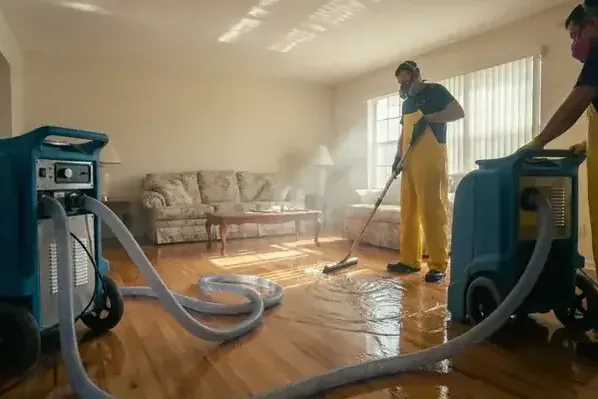
Why water extraction and removal needs a measured dry-out
- Dispatch around the clock. Active water is treated as urgent at any hour, weekends and holidays included, because drywall and subfloor keep wicking until extraction starts.
- Sized to the class of loss. Air movers and LGR dehumidifiers are set by the class of loss under the IICRC S500 drying standard, not by a guess.
- Readings decide the finish. Daily moisture readings track each wet material until it sits within 2 to 4 points of a dry reference in the same home.
- A claim file built during the work. Moisture maps, psychrometric logs and timestamped photos taken before demolition give the adjuster a clear record.
- Lower levels checked, not assumed. Sump pits, floor drains, wall bottoms and the slab edge get metered, not just the spot where water showed up.
First steps for water extraction and removal
- Check for safety. Look for live outlets and appliances near the water and keep everyone out of deep or dark standing water.
- Stop the inflow. Close the valve, clear the drain or divert runoff if it is safe to do that.
- Lift what you can. Move rugs, boxes and small furniture onto dry surfaces before the pump-out.
- Photograph the water. Take dated pictures of the depth and the affected rooms before extraction starts.
What does water extraction and removal cost in Kansas City, MO?
Water extraction on the Northland side typically runs $1,200 to $8,500 or more, depending on how deep the water is, how many rooms it reached and whether it is clean or gray.
One room, clean water
- Pump-out and wand pass
- Wet pad removal
- Moisture readings
Several rooms or a basement
- Deep-water pumps
- Carpet lifted and cut
- Air movers set
Whole level or gray water
- Gray-water safety steps
- Flooring and baseboard removal
- Extended equipment days
Ranges are typical, not a quote: category of water, square footage, material class and how fast drying started move the number most. Run the water damage cost calculator for a closer range.
How water extraction and removal is handled, step by step
Assess
Depth, water type and affected rooms are checked first.
Extract
Pumps and wands remove the standing water from every surface.
Dry
Air movers and dehumidifiers pull the remaining moisture out.
Verify
Readings confirm the materials are dry before equipment leaves.
Standing water is the plainest sign that a building has taken on more than it can shed. Extraction comes first because water left on a floor keeps moving into carpet pad, baseboards and the bottom edge of the drywall. Northland homes and businesses can reach that point after a failed supply hose, a flooded garage or a storm that overruns the yard. For storm cases, see storm flood cleanup.
How the pump-out is done
The extraction crew starts with truck-mounted or portable pumps for deep water, then switches to wands and weighted tools that press water out of carpet and pad. Hard floors are squeegeed and vacuumed so nothing is left to seep into seams. Pumps are matched to the depth, and the crew works toward the lowest spot so water is not left pooling behind.
- Pumps clear depth that a wet vacuum cannot
- Wands and weighted tools work water out of carpet
- Pad that cannot be saved is cut and removed
- Moisture readings show what still needs drying
Floor still covered? Describe the water and the crew will explain how the pump-out would go.
(888) 603-7319Size up the pump-outWhat decides whether carpet survives
Clean water caught early often leaves carpet and pad salvageable. Gray water, or clean water that has sat for a day or more, usually means the pad goes and the carpet is lifted for drying or replacement.
After the water is gone
Removing the standing water does not finish the job. Wall cavities, subfloor and baseboards still hold moisture, so air movers and dehumidifiers are set next, and readings are taken until the materials return to normal. The wider process is covered under structural drying.
Water extraction and removal across Kansas City and nearby communities
Extraction work runs across the Northland side of Kansas City, from Staley Farms and Copperleaf to the Highway 152 corridor, Interstate 29 and the neighborhoods around Hodge Park in Clay and Platte counties.
The same service nearby: water extraction and removal in Liberty, Gladstone, Smithville.
Related water damage services nearby
Water Extraction and Removal questions in Kansas City, MO
Still dealing with it?
Floor still covered? Describe the water and the crew will explain how the pump-out would go.
(888) 603-7319 Size up the pump-outHow quickly should standing water be removed?
As soon as it is safe to enter. Water left on a floor keeps spreading into pad and baseboards, and materials that stay wet for a day or two start to hold moisture that is much harder to dry out.
Can I use a wet vacuum myself?
A household wet vacuum handles a small spill but not a flooded room. It also cannot reach water held in pad and under flooring, so the pump-out and wand work are left to the crew.
Is the water clean or contaminated?
Water from a supply pipe or a leaking appliance starts clean but turns gray as it sits and touches soil, flooring and debris. Storm runoff is treated as contaminated, and sewage is handled as its own category.
Will the carpet have to come out?
Not always. Clean water caught early can often be extracted from carpet and pad and dried in place. Gray water, long exposure or a damaged pad usually means the pad is removed and the carpet is lifted or replaced.
Does extraction include drying?
Extraction removes the standing water and the water held in carpet. Drying is the next stage, using air movers and dehumidifiers on the framing, subfloor and walls, and its scope depends on how many days the equipment runs.
What should I photograph before the crew starts?
Take wide shots of each wet room, close shots of the high water mark on walls and furniture, plus any damaged belongings. Dated photos help the adjuster compare the loss to the work done.
Let the water out before it works into the walls
Water left standing moves into pad, framing and drywall. Extraction takes it out first so real drying can begin.
(888) 603-7319Reach the pump-out crew