Structural Drying and Dehumidification in Kansas City, MO
Removing the water is only half of a water loss. The drying team uses air movers, dehumidifiers and daily moisture readings to bring framing, subfloor and drywall back to normal.
(888) 603-7319Start the drying plan for the building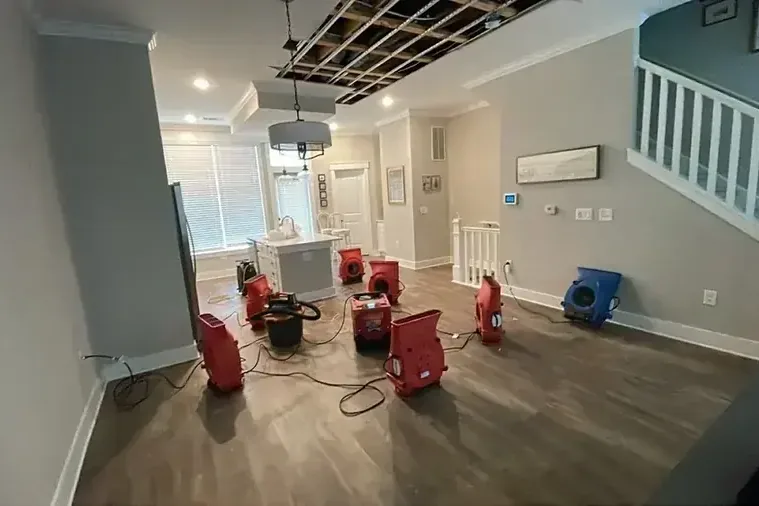
Why structural drying and dehumidification needs a measured dry-out
- Dispatch around the clock. Active water is treated as urgent at any hour, weekends and holidays included, because drywall and subfloor keep wicking until extraction starts.
- Sized to the class of loss. Air movers and LGR dehumidifiers are set by the class of loss under the IICRC S500 drying standard, not by a guess.
- Readings decide the finish. Daily moisture readings track each wet material until it sits within 2 to 4 points of a dry reference in the same home.
- A claim file built during the work. Moisture maps, psychrometric logs and timestamped photos taken before demolition give the adjuster a clear record.
- Lower levels checked, not assumed. Sump pits, floor drains, wall bottoms and the slab edge get metered, not just the spot where water showed up.
First steps for structural drying and dehumidification
- Stop the water source. Repair or shut off the leak so no more water enters.
- Keep the space closed. Close doors and windows in the wet area so dehumidifiers work efficiently.
- Hold off on fans. Household fans can push moisture into dry rooms.
- Note when it started. Write down when the water was found for the drying log.
What does structural drying and dehumidification cost in Kansas City, MO?
Structural drying typically runs $1,000 to $7,500 or more, depending on the drying class, how many rooms are wet and how many days the equipment needs to run.
Class 1 to 2, one room
- Air mover setup
- One dehumidifier
- Daily readings
Class 2 to 3, several rooms
- Multiple air movers
- Larger dehumidifiers
- Opened wall access
Class 4, dense materials
- Specialty drying equipment
- Extended equipment days
- Frequent readings
Ranges are typical, not a quote: category of water, square footage, material class and how fast drying started move the number most. Run the water damage cost calculator for a closer range.
How structural drying and dehumidification is handled, step by step
Measure
Moisture meters map which materials are wet.
Set
Equipment is placed to suit the room.
Monitor
Readings are taken and equipment is adjusted each visit.
Finish
Equipment is removed once readings match dry materials.
Water that is no longer visible can still be sitting inside framing, subfloor and drywall. Structural drying removes that hidden moisture in a controlled way, which protects the building and supports a clean repair.
How the equipment works together
Air movers push dry air across wet surfaces so moisture leaves the material, and dehumidifiers pull that moisture out of the air so it cannot settle back. The balance is adjusted as the readings fall.
- Air movers placed along wet walls and floors
- Dehumidifiers sized to the volume of the space
- Moisture meters used at every visit
- Containment where airflow must be directed
Water gone but the walls still damp? Describe what was wet and the crew will outline the drying plan.
(888) 603-7319Describe the damp wallsDense materials take longer
Carpet and drywall give up moisture quickly, while hardwood, framing and concrete hold it longer. Class 4 drying handles those dense materials with extra time and specialized equipment.
Knowing when it is done
Drying ends when the readings on affected materials match those of unaffected ones nearby, not on a calendar date. The log shows the adjuster the starting point, the daily trend and the final result. It pairs with water extraction and burst pipe water damage.
Structural drying and dehumidification across Kansas City and nearby communities
Drying work covers the Northland side of Kansas City, from Staley Farms and Copperleaf to Woodneath Farms, the Highway 152 corridor and Interstate 29, in Clay County and the Platte County portion.
The same service nearby: structural drying and dehumidification in Liberty, Gladstone, Smithville.
Related water damage services nearby
Structural Drying and Dehumidification questions in Kansas City, MO
Still dealing with it?
Water gone but the walls still damp? Describe what was wet and the crew will outline the drying plan.
(888) 603-7319 Describe the damp wallsHow long does structural drying take?
Most jobs run several days, but the readings decide. Drywall and carpet dry faster than hardwood, framing and concrete, and the crew adjusts the equipment at each visit.
Why are dehumidifiers needed as well as fans?
Fans move moisture off the material and into the air. Without dehumidifiers that moisture lands back on surfaces or in the next room, so the two work as a pair.
What do the moisture readings show?
They show how wet each material is compared with unaffected materials of the same type, which tells the crew where to add equipment and when drying is complete.
Does the equipment run all day and night?
Yes. Drying works only while the equipment runs, so air movers and dehumidifiers stay on until the readings are dry. The crew explains the setup at the first visit.
Can drying prevent mold?
Drying helps, since mold needs moisture. Getting materials back to normal moisture quickly gives it little to grow on, which is why fast action matters.
Is drying covered by insurance?
Mitigation is often covered when the water damage itself is covered. The daily logs and final readings give the adjuster a clear record of what was done.
Dry the building to measured readings
Moisture left in framing and subfloor keeps causing trouble after the visible water is gone. The crew dries it until the readings say it is finished.
(888) 603-7319Reach the structural drying crew