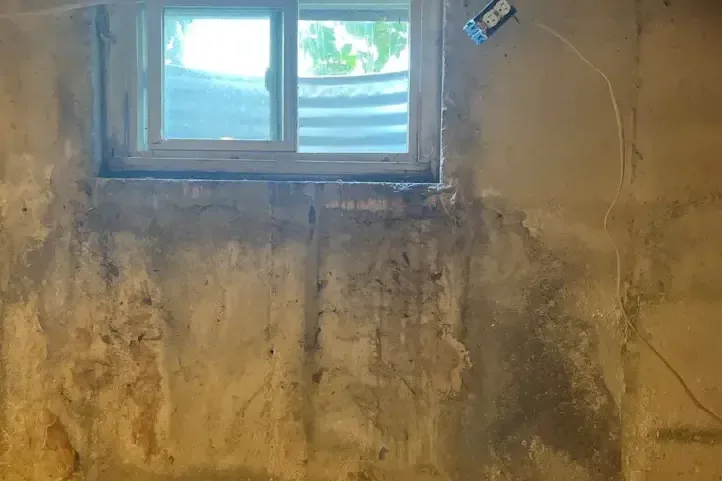
The Northland is the part of Kansas City, Missouri, north of the Missouri River, across Clay and Platte counties. Kansas City counted 508,090 people at the 2020 census, and a KC Water Services engineering officer has said that rain intensities have exceeded what most storm water systems are designed to carry.
Key takeaways
- A KC Water Services engineering officer said most storm water systems are designed for a 10-year storm and that rain intensities have exceeded that.
- The same official said litter and yard waste dumped before rain can clog storm inlets and stop water moving.
- Storm water that enters a building carries soil and contamination, so it is cleaned as Category 3 water.
- Extraction, removal of porous materials and measured drying follow in that order.
- Photos before cleanup and a conversation with the insurer about flood and water backup coverage help later.
What a 10-year storm means
A 10-year storm is a rain event with about a one in 10 chance of occurring in any year. A KC Water Services engineering officer said most storm water systems are designed to carry that much rain, and that rain intensities have exceeded it.
When a system is overwhelmed, water runs overland across streets, yards and driveways toward low spots. A house that sits at the low end of that path can take on water even though no pipe has failed.
Even a well kept street can carry more water than its drains handle in the heaviest bursts. When the drains fill, the street itself becomes the channel.
How clogged inlets make it worse
The same official said that litter and yard waste dumped before rain can clog storm inlets and stop water from moving. A blocked grate turns a street into a shallow pond and sends water toward the nearest driveway or garage.
A blocked inlet is easy to spot from the street: leaves stacked against the grate, a shallow pond that does not drain or trash wedged in the opening. Reporting it early gives crews a chance to clear it before the next storm.
- Keep grass clippings and leaves out of the street and the gutter.
- Bag yard waste instead of sweeping it toward the curb.
- Never dump litter or debris near a storm inlet.
- Report a blocked inlet to the city.
- Clear debris from a grate with a rake only when the water is not moving, and never step into flowing water.
Where water goes on a lot
Rain that lands on a roof travels through gutters and downspouts and onto the ground. If the ground slopes toward the house, or a downspout drops water beside the foundation, that water has a short path to a wall.
Fall leaves are a common blockage, which makes October a good month to clear gutters and the street in front of a house.
- Downspouts that discharge beside the foundation.
- Soil that has settled against the wall and slopes inward.
- Driveways that run toward the garage.
- Window wells without covers that collect rain.
- Gutters clogged with leaves that overflow in a downpour.
How storm water gets into a house
Water takes the lowest and weakest route. In heavy rain that usually means one of a handful of entry points.
Where a home has a lower level, it is the first place water collects.
Water can also enter in less obvious ways, such as through the gap around a utility penetration or up through the joint where a lower level wall meets the floor.
- Doors and thresholds on the lowest side of the house.
- Window wells that fill faster than they drain.
- Foundation cracks and wall joints.
- Floor drains when a drain connection backs up.
- Garage doors that sit below the level of the street.
Why storm water is treated as contaminated
Water that crosses streets and yards picks up soil, oil, lawn chemicals and sometimes sewage. When it enters a building, it is handled as Category 3 water, the same class used for sewage backups.
That changes what can stay. Porous materials such as carpet, pad, insulation and low drywall that soaked up this water are removed, while hard surfaces and framing are cleaned and disinfected.
The cleanup order
Each step protects the next, so the order does not change from one house to another. Prompt water extraction is the first of them.
Extraction
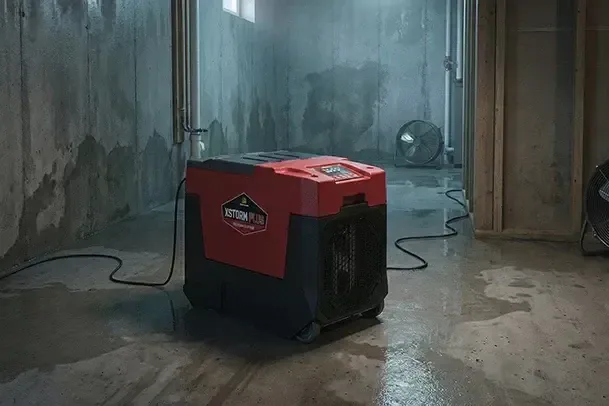
The extraction crew removes standing water with pumps and portable or truck-mounted units. Where a home has a lower level that took on water, basement flooding cleanup starts with pumping it out in stages.
Removal and disinfection
Once the water is out, wet drywall, insulation and flooring come out and silt is shoveled away. Hard surfaces are cleaned and treated.
- Drywall is cut above the waterline.
- Carpet and pad are rolled up and hauled out.
- Wet insulation and trim are removed.
- Silt is shoveled out and the surfaces washed.
Drying and checking
Air movers and dehumidifiers run until moisture readings match a dry reference. Storm and flash flood cleanup is finished when the numbers say so, not when the surface looks dry.
- Readings are taken on walls, floors and framing at each visit.
- Wall cavities are opened where readings stay high.
- Drying equipment is removed only after the final readings.
Records and the day after
Insurance policies draw lines between flood, surface water and water backup. Standard homeowners policies commonly exclude flood, and backup coverage is often a separate endorsement, so the wording decides what applies.
Photos taken before cleanup help whichever way the claim goes.
The first day after the water is out matters. Mold can start in damp materials within 24 to 48 hours, which is why drying is not postponed.
The photos and receipts gathered in the first few days usually matter more than any later description of the damage.
- Photograph the waterline on walls and the damaged belongings.
- List losses room by room.
- Keep receipts for pumping, hauling and drying.
- Keep wet items off the lawn and out of the sun until they are photographed.
- Throw out food, medicine and cosmetics that touched flood water.
- Ask the insurer about temporary housing if rooms cannot be used. More about local options is on the Northland water damage pages.
Questions
What is a 10-year storm?
It is a rain event with about a one in 10 chance of occurring in any year. A KC Water Services engineering officer said most storm water systems are designed for it.
Can a clogged storm inlet cause water in a house?
It can contribute. The official said that litter and yard waste can clog inlets and stop water from moving, which sends runoff toward low spots.
Is storm water in a building safe to handle?
It is treated as contaminated. Gloves, boots and a mask are sensible, and electrical hazards come first.
Does storm water cleanup differ from a plumbing leak?
Yes. A supply leak starts with clean water, while storm water is contaminated, so porous materials it touched are removed rather than dried in place.
Does the Northland include Kansas City, Kansas?
No. The Northland is the part of Kansas City, Missouri, north of the Missouri River, across Clay and Platte counties.
When is the best time to clear gutters and storm inlets?
Before rain is forecast, and again after leaves fall. Clearing them ahead of a storm keeps water moving away from the house.