Water Extraction in Kearney, MO
Standing water does the most harm early on. The extraction crew pumps it out, lifts what cannot be saved and gets drying started before the water wicks any further into the structure.
(888) 603-7319Call to get the water out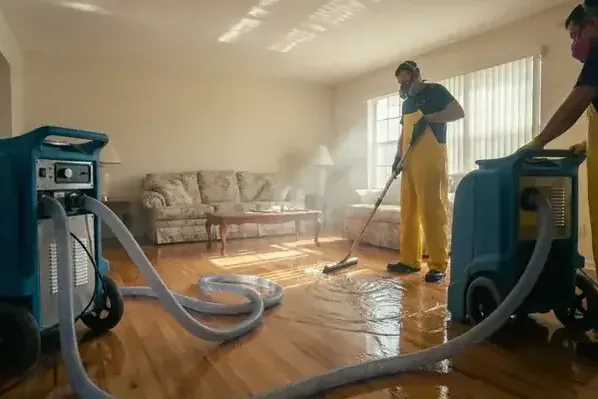
Why water extraction and removal needs a measured dry-out
- Dispatch around the clock. Active water is treated as urgent at any hour, weekends and holidays included, because drywall and subfloor keep wicking until extraction starts.
- Sized to the class of loss. Air movers and LGR dehumidifiers are set by the class of loss under the IICRC S500 drying standard, not by a guess.
- Readings decide the finish. Daily moisture readings track each wet material until it sits within 2 to 4 points of a dry reference in the same home.
- A claim file built during the work. Moisture maps, psychrometric logs and timestamped photos taken before demolition give the adjuster a clear record.
- Lower levels checked, not assumed. Sump pits, floor drains, wall bottoms and the slab edge get metered, not just the spot where water showed up.
First steps for water extraction and removal
- Stop the source. Shut off the supply, cut power to wet areas if it is safe and see how far the water spread.
- Pump out deep water. Submersible pumps handle depth first so wands can work on a thin film of water.
- Extract every surface. Wands pull water from carpet and hard floors, and soaked pad is cut out.
- Hand off to drying. Readings mark the wet areas, then air movers and dehumidifiers take over.
What does water extraction and removal cost in Kearney, MO?
Water extraction usually costs between $1,200 and $8,500 or more, depending on how many rooms are wet, how deep the water stood and whether it was clean or gray.
One room, clean water
- Pump and wand removal
- Wet pad lifted
- Readings taken
Several rooms or a basement
- Deeper water pumped
- Pad removed throughout
- Drying plan written
Whole level or gray water
- Full level extracted
- Contaminated materials out
- Surfaces cleaned
Ranges are typical, not a quote: category of water, square footage, material class and how fast drying started move the number most. Run the water damage cost calculator for a closer range.
How water extraction and removal is handled, step by step
Assess
Check depth, source and water type before choosing equipment.
Pump
Clear the deep water with submersible pumps.
Extract
Pull water from carpet, tile and wood with wands.
Verify
Take readings and set the drying plan.
In a Kearney home, standing water is most urgent after the spring and summer storms that make up most of the area's severe weather. Extraction comes first because every inch of water left on a floor keeps soaking into carpet pad, baseboards and the lower drywall, and removing it early lowers how much has to be torn out later.
How the water comes out
The extraction crew starts with submersible pumps for deep water, then switches to wands that pull water off hard floors and out of carpet. The pad underneath holds the most, so it is often removed while the carpet is cleaned and dried.
- Submersible pumps clear deep standing water
- Wands lift water from carpet, tile and wood
- Saturated pad is cut out and hauled away
- Moisture readings show what is still wet
Standing water on the floor? Extraction works best when it starts before the water soaks in any further.
(888) 603-7319Call to pump out waterWhat gets checked next
Surface water is only part of the loss. Meters and thermal imaging check baseboards, wall cavities and the subfloor, because water left in those layers keeps the room wet long after the floor looks dry. This check also tells the crew how many air movers the room needs.
When extraction should start
Start as soon as the source is stopped and it is safe to enter. Clean supply water can often be handled in place, but drain water changes what can be kept, which is where sewage backup cleanup applies. After removal, structural drying takes over.
Water extraction and removal across Kearney and nearby communities
Work covers homes and businesses across ZIP code 64060, including the parts of town served by the Kearney R-I School District and the small area that falls in the Excelsior Springs 40 School District.
The same service nearby: water extraction and removal in Liberty, Excelsior Springs, Smithville.
Water Extraction and Removal questions in Kearney, MO
Still dealing with it?
Standing water on the floor? Extraction works best when it starts before the water soaks in any further.
(888) 603-7319 Call to pump out waterHow soon after a leak should water be extracted?
As soon as the source is stopped and the area is safe to enter. Wet pad and baseboards begin to break down quickly, and humid summer air speeds up musty smells and surface growth.
Can carpet be saved after standing water?
Often yes when the water was clean and the work starts quickly. The pad underneath usually comes out and is replaced, while the carpet itself is lifted, cleaned and dried.
Does extraction include drying?
Extraction removes the water that can be pumped or pulled. Drying is a separate phase using air movers and dehumidifiers, and both are needed for a finished job.
What equipment is used?
Submersible pumps handle depth, wands and extractors handle carpet and hard floors, and moisture meters show where water remains. Equipment size follows the volume of water and the rooms involved.
Is gray water handled differently?
Yes. Water from washers, dishwashers or any drain can carry contaminants, so crews wear protective gear, remove soaked porous materials and clean surfaces after extraction.
Can extraction start before the leak is repaired?
The source has to be stopped first, at least by closing the shutoff valve. After that, extraction can begin while the repair is scheduled, so the water does not keep spreading.
Get the water out of the house
Pumps, wands and moisture readings go to work on the flooded rooms, and the drying plan follows right behind.
(888) 603-7319Call to start extraction