Commercial Water Damage in Smithville, MO
Commercial water damage can involve buildings in the Downtown Smithville Historic District along Main Street, and fast drying limits downtime for owners, tenants, staff and customers.
(888) 603-7319Get the space dried and reopened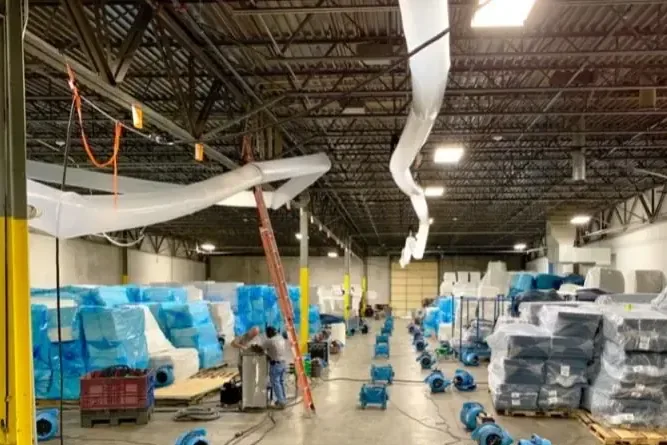
Why commercial water damage needs a measured dry-out
- Dispatch around the clock. Active water is treated as urgent at any hour, weekends and holidays included, because drywall and subfloor keep wicking until extraction starts.
- Sized to the class of loss. Air movers and LGR dehumidifiers are set by the class of loss under the IICRC S500 drying standard, not by a guess.
- Readings decide the finish. Daily moisture readings track each wet material until it sits within 2 to 4 points of a dry reference in the same home.
- A claim file built during the work. Moisture maps, psychrometric logs and timestamped photos taken before demolition give the adjuster a clear record.
- Lower levels checked, not assumed. Sump pits, floor drains, wall bottoms and the slab edge get metered, not just the spot where water showed up.
First steps for commercial water damage
- Stop the water. Shut off the supply or isolate the leaking system if it is safe.
- Protect people. Block off wet floors and keep power off in affected areas.
- Lift inventory. Move stock and files onto high shelves or pallets.
- Document it all. Photograph the damage and note which rooms are affected.
What does commercial water damage cost in Smithville, MO?
Commercial water damage usually costs between $3,000 and $25,000 or more, depending on the size of the space, the type of water and how many units are affected.
One suite or storefront
- Water extracted
- Floors dried
- Moisture logs kept
Several units or floors
- Zoned drying plan
- Ceiling tiles replaced
- Daily reports
Large building loss
- Heavy extraction
- Wide material removal
- Phased drying
Ranges are typical, not a quote: category of water, square footage, material class and how fast drying started move the number most. Run the water damage cost calculator for a closer range.
How commercial water damage is handled, step by step
Assess
The wet zone is mapped and isolated.
Extract
Water is removed from floors and carpet.
Dry
Equipment is zoned and monitored daily.
Report
Logs go to the owner and carrier.
When water gets into a commercial building, every day closed costs money. Drying is planned around the floor plan, the materials and the hours the space is used, so affected areas are dried while the rest stays in service.
Planning around the building
Equipment is placed to isolate the wet zone, and the crew works around tenants, staff and customers where it is safe. Carpet tile, drywall and ceiling tiles that cannot be saved are removed in sections, after water extraction has cleared the standing water.
- Wet zones are separated from dry areas
- Ceiling tiles and insulation are checked
- Flooring is dried or removed by type
- Daily readings are shared with the manager
Water in the store, office or classroom building? Extraction and containment come first.
(888) 603-7319Limit the downtimeHistoric and school buildings
Historic buildings often have older plaster, masonry and wood, which dry slowly and need a gentle, monitored plan. School buildings in the Smithville R-II School District have large rooms and many surfaces, so they are dried in zones.
Records for owners and carriers
Moisture logs, photos and equipment records are kept for the insurance carrier and the property manager. For how the drying itself works, see structural drying.
Commercial water damage across Smithville and nearby communities
Commercial water damage service covers Smithville businesses, from storefronts along Main Street to buildings on Route DD and U.S. Route 169, wherever a break, a roof leak or a flood has wet a floor.
The same service nearby: commercial water damage in Liberty, Kearney, Gladstone.
Commercial Water Damage questions in Smithville, MO
Still dealing with it?
Water in the store, office or classroom building? Extraction and containment come first.
(888) 603-7319 Limit the downtimeCan the rest of the building keep running?
Frequently, yes. The wet zone is sectioned off with its own equipment, so unaffected rooms can stay open as long as safety and the type of water allow.
Who documents the loss for the carrier?
The drying crew keeps moisture logs, photos and equipment records. The property manager or owner can hand them to the adjuster as the claim file.
How are ceiling tiles handled?
Wet ceiling tiles and the insulation above are usually removed, since they sag and hold moisture. Grid and framing are dried and checked before new tiles go in.
Does the type of building change the plan?
Yes. A storefront with carpet tile dries differently from a school corridor with hard floors or a historic building with old plaster, and the equipment is chosen to match.
Is sewage handled differently in a business?
Yes. Sewage in any building is contaminated, so the area is contained, porous materials are removed and surfaces are sanitized before any drying begins.
A wet floor can close a business quickly, so the drying has to be planned.
The mitigation team zones off the wet area, removes the water and dries the structure while keeping the rest usable.
(888) 603-7319Request commercial drying