Commercial Water Damage in Kansas City, MO
The Northland and the Highway 152 corridor are fast-growing parts of Kansas City, and businesses there need a dependable water response. The crew limits downtime and documents the loss.
(888) 603-7319Get a business water response plan moving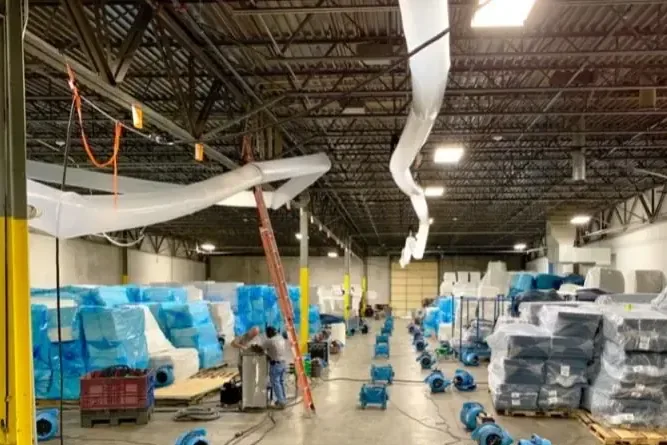
Why commercial water damage needs a measured dry-out
- Dispatch around the clock. Active water is treated as urgent at any hour, weekends and holidays included, because drywall and subfloor keep wicking until extraction starts.
- Sized to the class of loss. Air movers and LGR dehumidifiers are set by the class of loss under the IICRC S500 drying standard, not by a guess.
- Readings decide the finish. Daily moisture readings track each wet material until it sits within 2 to 4 points of a dry reference in the same home.
- A claim file built during the work. Moisture maps, psychrometric logs and timestamped photos taken before demolition give the adjuster a clear record.
- Lower levels checked, not assumed. Sump pits, floor drains, wall bottoms and the slab edge get metered, not just the spot where water showed up.
First steps for commercial water damage
- Shut off the source. Close the valve or breaker for the affected area if it is safe.
- Protect inventory. Move stock and equipment off wet floors or cover it.
- Notify the owner. Inform the building owner and the insurance carrier about the loss.
- Keep people clear. Block off wet areas to prevent slips.
What does commercial water damage cost in Kansas City, MO?
Commercial water damage typically runs $3,000 to $25,000 or more, depending on the floor area, the materials involved and whether business operations must keep running during the work.
One suite or storefront
- Water extraction
- Targeted drying
- Moisture logs
Several units or floors
- Multi-zone drying
- Wall and ceiling access
- Daily readings
Large building loss
- Phased drying plan
- Large-scale equipment
- Detailed reporting
Ranges are typical, not a quote: category of water, square footage, material class and how fast drying started move the number most. Run the water damage cost calculator for a closer range.
How commercial water damage is handled, step by step
Secure
Source stopped, area made safe.
Extract
Water is removed from floors and low areas.
Dry
Equipment dries the structure in planned zones.
Report
Logs and photos are prepared for the insurer.
A water loss at a business stops work as well as damaging the building. The first priorities are safety, shutting off the source and protecting inventory, equipment and records, followed by a drying plan that lets operations resume as soon as the structure is sound.
A fast-growing corridor
The Highway 152 corridor in the Northland is a fast-growing area, so owners and managers in newer areas often want a response plan in place before a loss happens.
- Source shut off and affected areas isolated
- Inventory and equipment moved or covered
- Extraction and drying started in sequence
Business flooded or leaking? Describe the building and the crew will outline a response plan.
(888) 603-7319Plan the responseWorking around a live business
Staging is arranged to keep entrances, restrooms and unaffected areas open where possible, and equipment is placed to limit noise and trip hazards.
Documenting the loss
Moisture logs, photos and a written scope give the building owner and the insurer a record of what happened. For related work see water extraction and structural drying.
Commercial water damage across Kansas City and nearby communities
Commercial work covers businesses on the Northland side of Kansas City, with attention to the Highway 152 corridor, Interstate 29 and Tiffany Springs Parkway, across both Clay County and the Platte County portion.
The same service nearby: commercial water damage in Liberty, Gladstone, Smithville.
Related water damage services nearby
Commercial Water Damage questions in Kansas City, MO
Still dealing with it?
Business flooded or leaking? Describe the building and the crew will outline a response plan.
(888) 603-7319 Plan the responseHow is a business water loss handled differently?
The plan prioritizes safety, access and operations. Staging, containment and drying zones are set so that unaffected areas can keep running while the wet areas are dried.
Who documents the loss for the insurer?
The crew keeps photos, a written scope and daily moisture logs, and these records go to the building owner and the carrier to support the claim.
Can the building stay open during drying?
Often partly. Unaffected areas can usually remain in use, while wet zones are isolated and dried. The scope and layout decide what is practical, and the crew explains the plan before work starts.
What about inventory and equipment?
Stock and equipment are moved off wet floors or covered, and items that cannot be saved are photographed and listed for the claim.
Does a larger building take much longer to dry?
Not always. Size matters, but the materials and the amount of water matter more. Equipment is placed in zones and adjusted until each area reads dry.
Get the business dried and documented
Every day of water damage costs a business revenue as well as materials. The crew works to limit downtime and keep the claim records clear.
(888) 603-7319Talk to the commercial crew