Sewage Backup Cleanup in Kansas City, MO
Sewage in a home is a health problem as well as a water problem. The crew works in protective gear, removes contaminated materials and disinfects the area before drying begins.
(888) 603-7319Get a protective-gear crew on the backup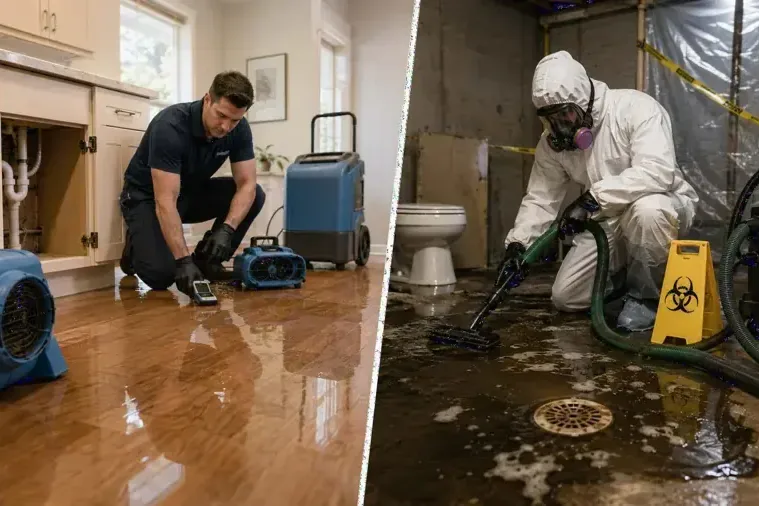
Why sewage backup cleanup needs a measured dry-out
- Dispatch around the clock. Active water is treated as urgent at any hour, weekends and holidays included, because drywall and subfloor keep wicking until extraction starts.
- Sized to the class of loss. Air movers and LGR dehumidifiers are set by the class of loss under the IICRC S500 drying standard, not by a guess.
- Readings decide the finish. Daily moisture readings track each wet material until it sits within 2 to 4 points of a dry reference in the same home.
- A claim file built during the work. Moisture maps, psychrometric logs and timestamped photos taken before demolition give the adjuster a clear record.
- Lower levels checked, not assumed. Sump pits, floor drains, wall bottoms and the slab edge get metered, not just the spot where water showed up.
First steps for sewage backup cleanup
- Stay out. Keep people and pets away from the affected area and stop using the drains.
- Do not touch. Avoid handling contaminated items or walking through the water.
- Photograph from a distance. Take photos from the doorway for the claim without entering.
- Call the crew. Describe the source and how far the backup spread.
What does sewage backup cleanup cost in Kansas City, MO?
Sewage backup cleanup typically runs $2,500 to $15,000 or more, depending on how many rooms were affected and how much porous material has to be removed.
Small backup, hard floor
- Water extraction
- Surface disinfection
- Air mover drying
Finished room
- Porous materials removed
- Containment barriers set
- Dehumidifier drying
Whole basement
- Full demolition
- Antimicrobial treatment
- Extended drying
Ranges are typical, not a quote: category of water, square footage, material class and how fast drying started move the number most. Run the water damage cost calculator for a closer range.
How sewage backup cleanup is handled, step by step
Contain
The affected area is sealed and protected.
Remove
Contaminated porous materials are cut out and bagged.
Disinfect
Hard surfaces are cleaned and treated.
Dry
Equipment runs until readings return to normal.
Sewage carries bacteria and other contaminants, so it is handled differently from clean water. The affected area is closed off, people and pets stay out, and the crew works in protective gear from the first step.
Rain, drains and cause
A KC Water Services engineering officer has said rain intensities have exceeded what most storm water systems are designed to handle. That remark was about storm water, so a sewage backup can have other causes, and the plumber traces the source while the crew handles the cleanup.
Sewage in the house? Describe where it came from and the crew will explain the safe cleanup steps.
(888) 603-7319Sort out the sewage backupWhat gets removed and what gets cleaned
Porous materials that touched sewage cannot be reliably cleaned, so carpet, pad, insulation and drywall are cut out and bagged. Hard surfaces are scrubbed and treated with an antimicrobial product, then the area is dried to measured readings so moisture left in the framing does not keep feeding odors or new growth.
- Carpet and pad bagged out
- Wet drywall and insulation removed
- Hard floors and framing disinfected
- Contents sorted into salvage and discard
Staying safe during cleanup
Owners should not wade through the water, run a household vacuum or handle contaminated items. Children, pets and anyone with health concerns are best kept away until the area is cleared. For the drying that follows, see structural drying and basement flooding cleanup.
Sewage backup cleanup across Kansas City and nearby communities
Sewage cleanup covers the Northland side of Kansas City in Clay County and Platte County, including Copperleaf, Woodneath Farms, Davidson Farms and Staley Farms and the neighborhoods along Highway 152 and Interstate 29.
The same service nearby: sewage backup cleanup in Liberty, Gladstone, Smithville.
Related water damage services nearby
Sewage Backup Cleanup questions in Kansas City, MO
Still dealing with it?
Sewage in the house? Describe where it came from and the crew will explain the safe cleanup steps.
(888) 603-7319 Sort out the sewage backupIs sewage water dangerous to touch?
Yes. It carries bacteria and can cause illness through skin contact, splashes and contaminated surfaces, so owners should avoid contact and leave removal to a crew with protective gear and the right disinfectants.
Can carpet that touched sewage be saved?
Rarely. Porous materials such as carpet, pad and drywall absorb contamination that cannot be reliably cleaned out, so they are removed and replaced rather than dried and reused.
How is the area made safe afterward?
Hard surfaces are scrubbed and treated with an antimicrobial product, and the structure is dried so lingering moisture does not feed odors or new growth. Readings and the cleaning record are kept for the file.
Does insurance cover a sewage backup?
It depends on the policy, and some policies require a separate endorsement for sewer or drain backup. Ask the insurer early and keep photos, receipts and the cleanup record.
Should the family stay in the house?
Many owners choose to stay elsewhere until the area is cleared, especially with children, older adults or anyone with health concerns. The crew can explain when it is safe to return to the affected rooms.
Can heavy rain cause a backup?
A KC Water Services engineering officer said rain intensities have exceeded what most storm water systems are designed for. That comment concerned storm water systems, so the cause of a backup can differ, and tracing it is a job for a plumber.
Get the contaminated area contained and cleaned
Sewage spreads bacteria into every porous material it touches. The crew contains the area, removes what cannot be cleaned and disinfects the rest.
(888) 603-7319Talk to the cleanup crew